Grading and Drainage
Standing water and unstable slopes are problems — but they’re also opportunities. With careful grading and intelligent drainage, we transform challenges into strong, usable ground.
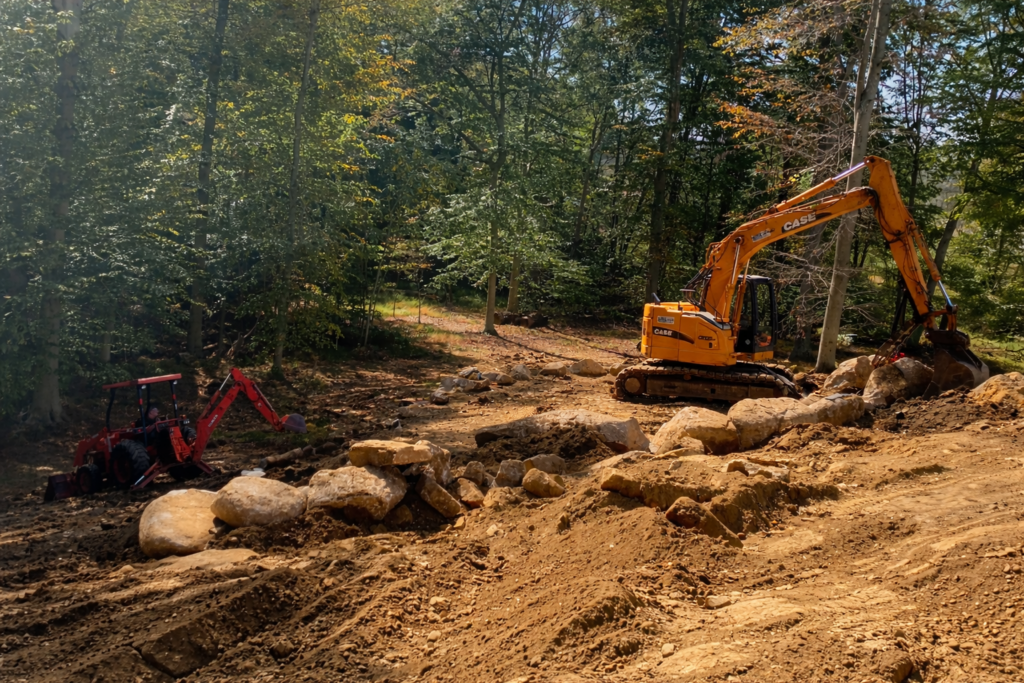
Drain. Grade. Protect.
Water will always move – the question is whether it moves with intention. As landscapes mature and new features are introduced, subtle shifts in elevation can redirect runoff, creating standing water, erosion or pressure against foundations.
Through strategic cutting and filling, grading reshapes the land to create stable, level areas that make sloped properties usable for play spaces, pools, structures and parking. Drainage systems – including buried downspouts, swales, French drains and foundation waterproofing – manage how water flows across and away from the property. When properly designed and executed, these systems protect your home, preserve your landscape and establish ground that performs as reliably as it looks.
Drainage and Waterproofing
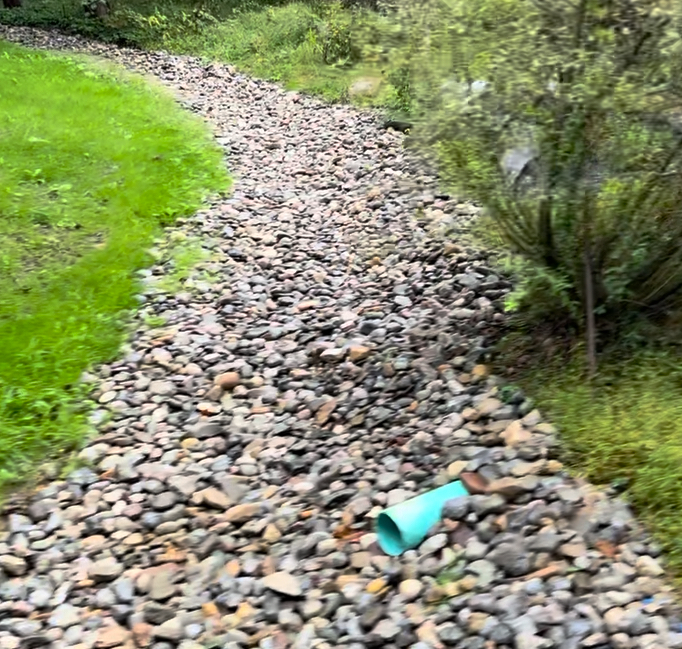
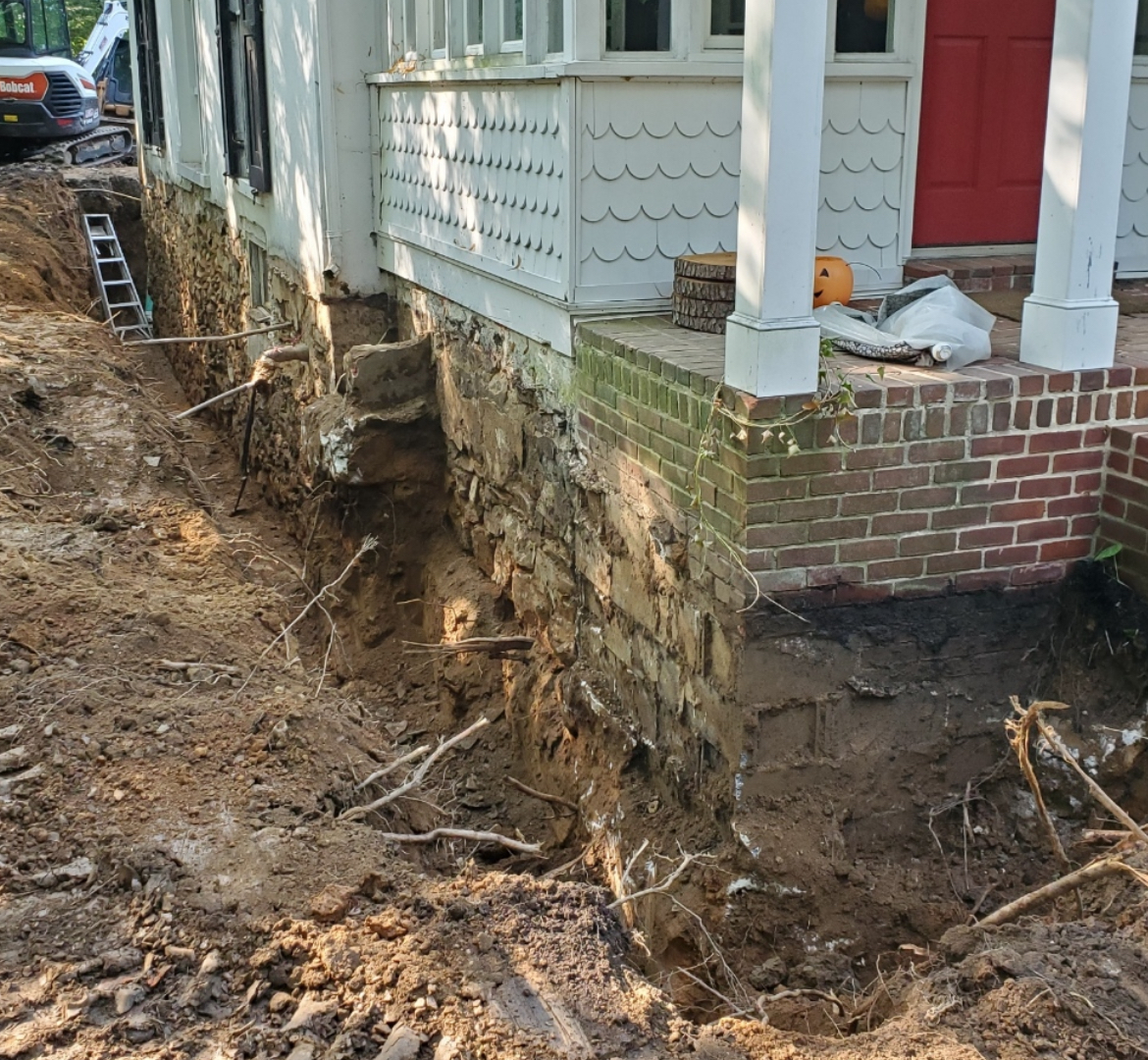
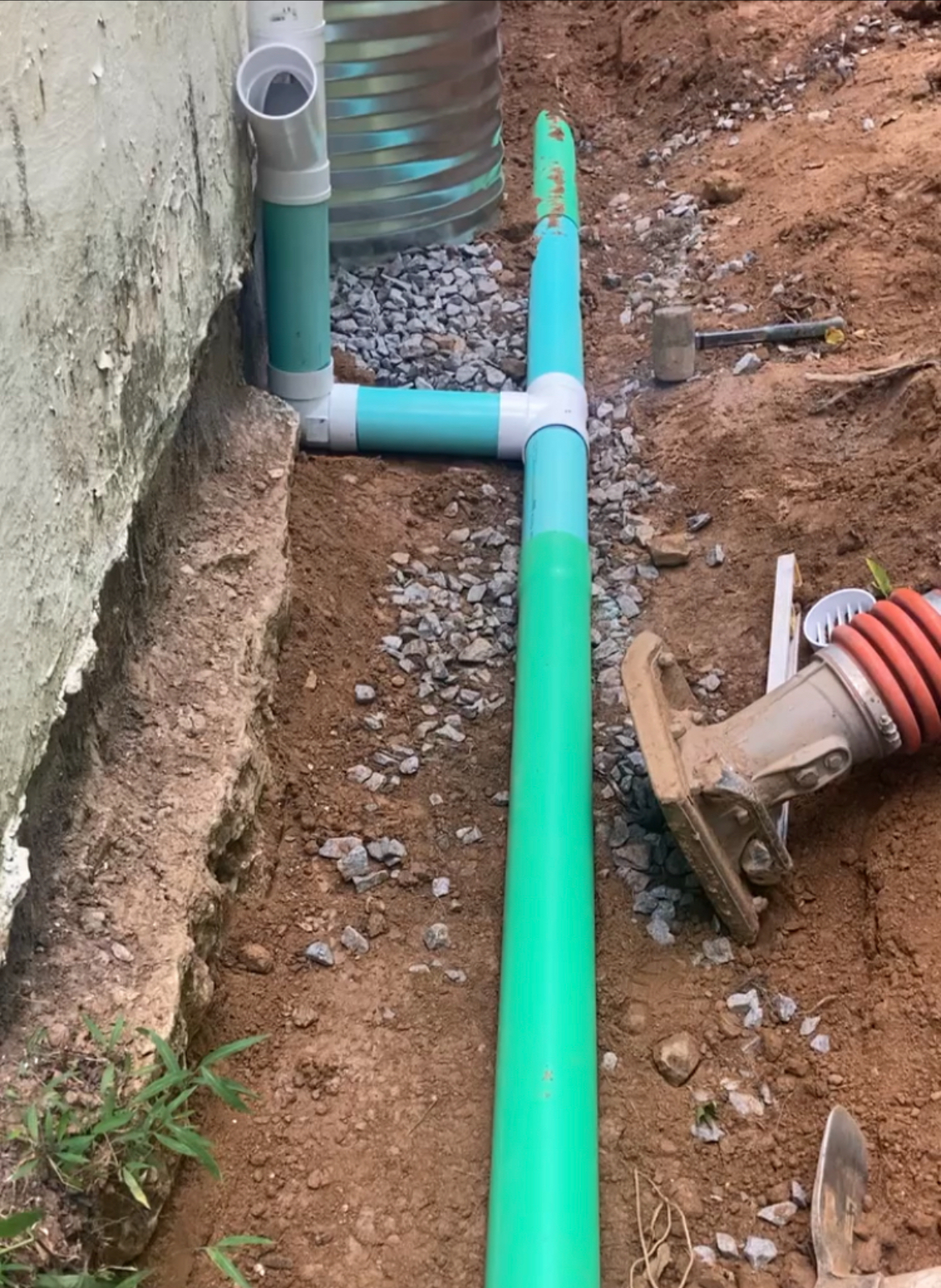
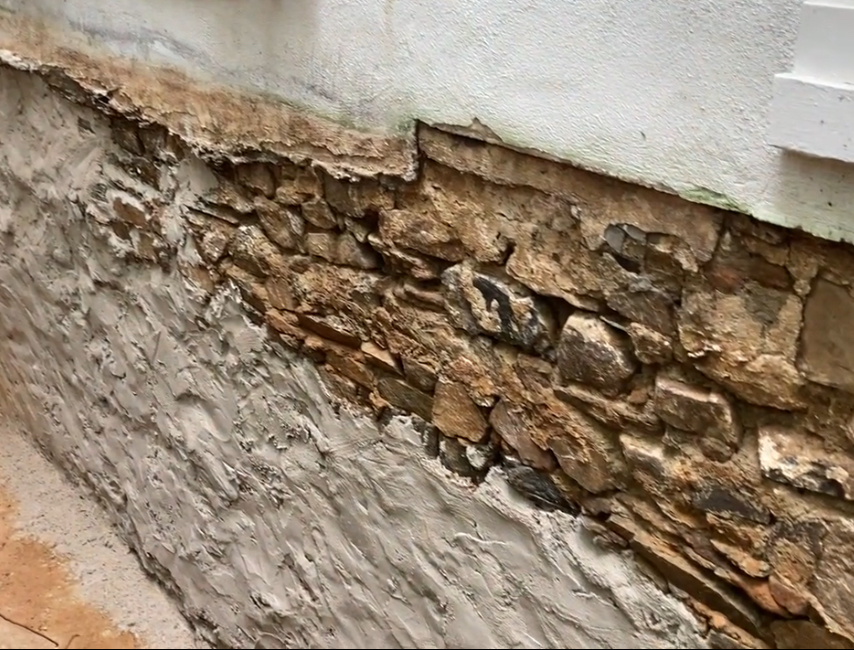
Drainage solutions are designed to guide water where it belongs – away from foundations, structures and finished surfaces. As properties evolve and elevations shift over time, runoff patterns change. Buried downspouts, swales, French drains and foundation waterproofing systems work together to redirect surface and subsurface water safely and efficiently.
The goal is not just removal, but control. Proper drainage protects basements, preserves hardscaping, creates more usable turf areas and extends the lifespan of everything built above it. When thoughtfully engineered and discreetly installed, these systems remain largely unseen – yet they are among the most important elements of a well-performing landscape.
See what it’s like to work with us
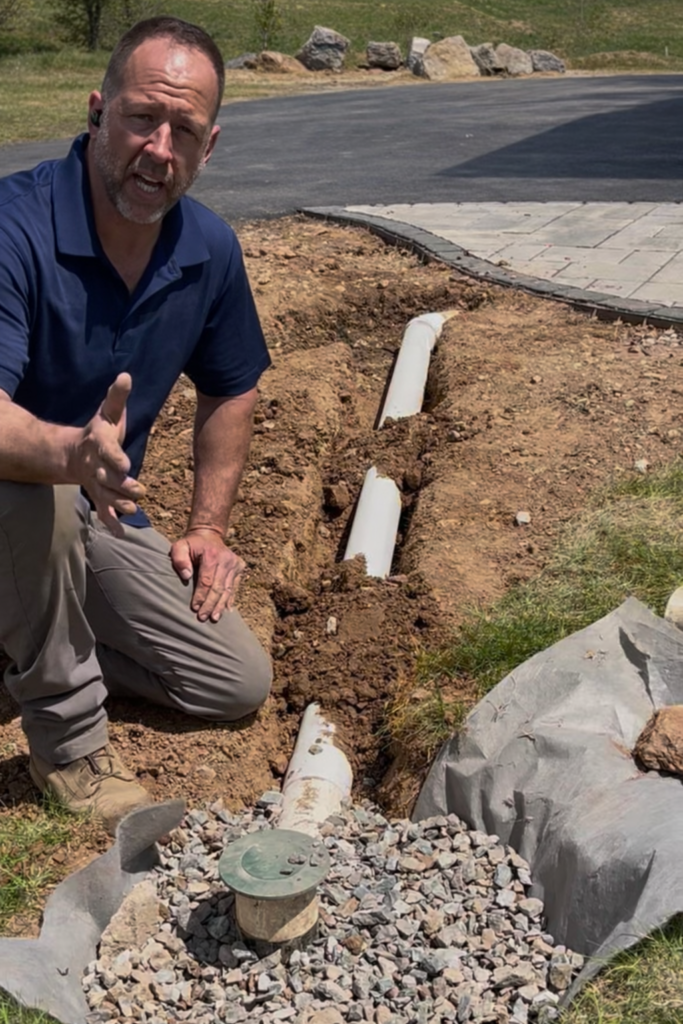
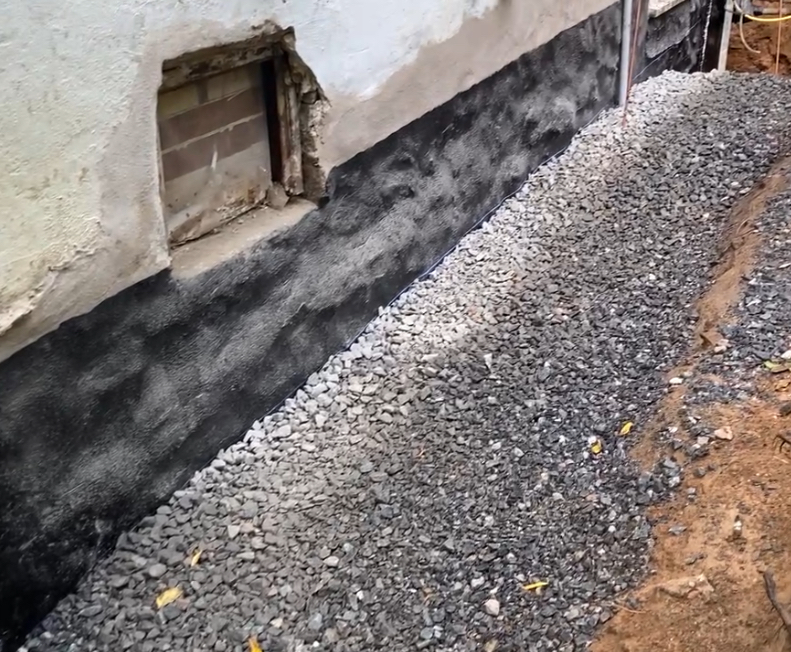
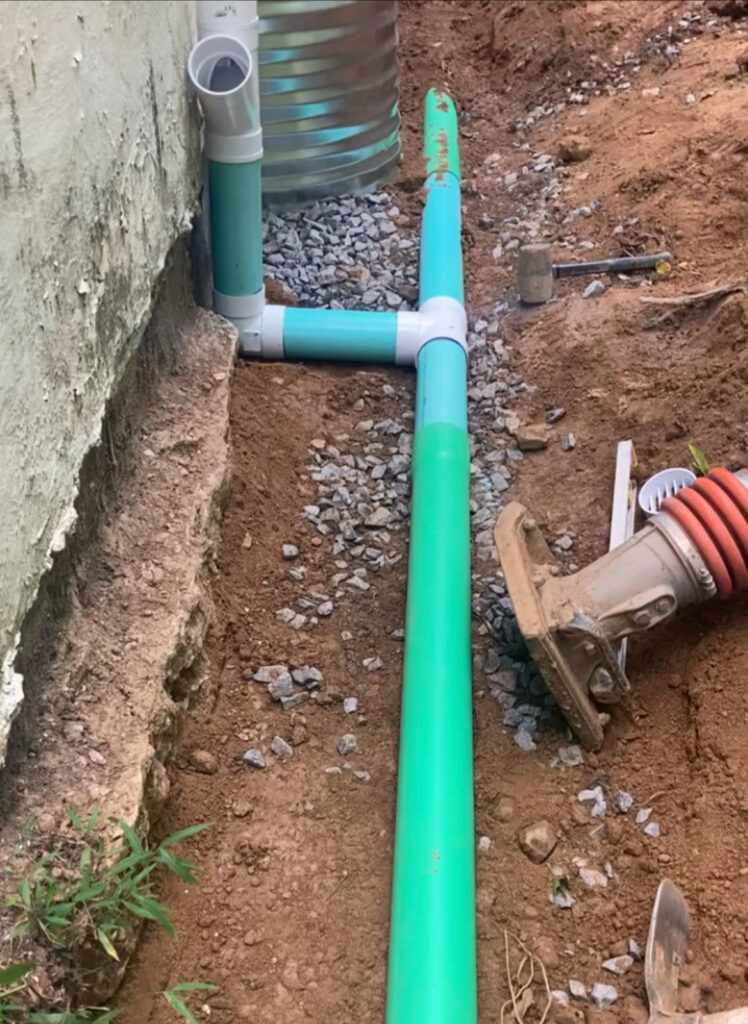
Managing flow to solve a problem.
Direct the Water
Grading
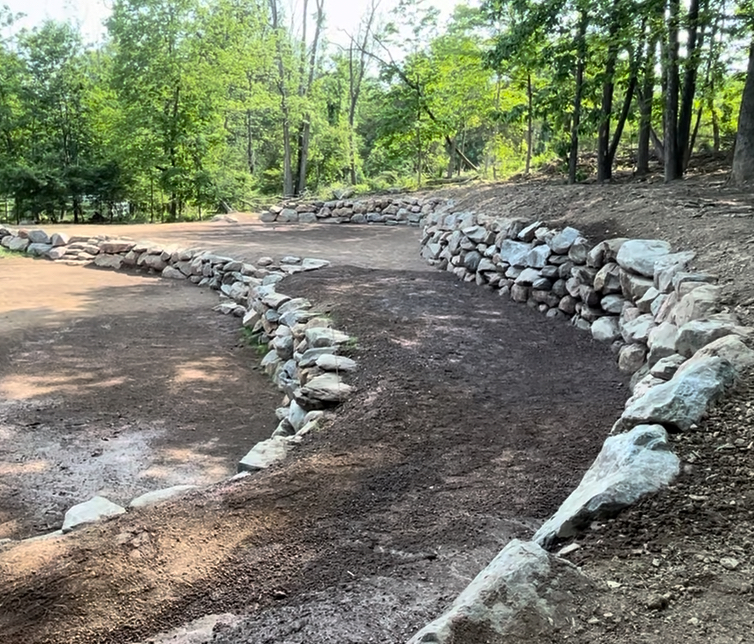
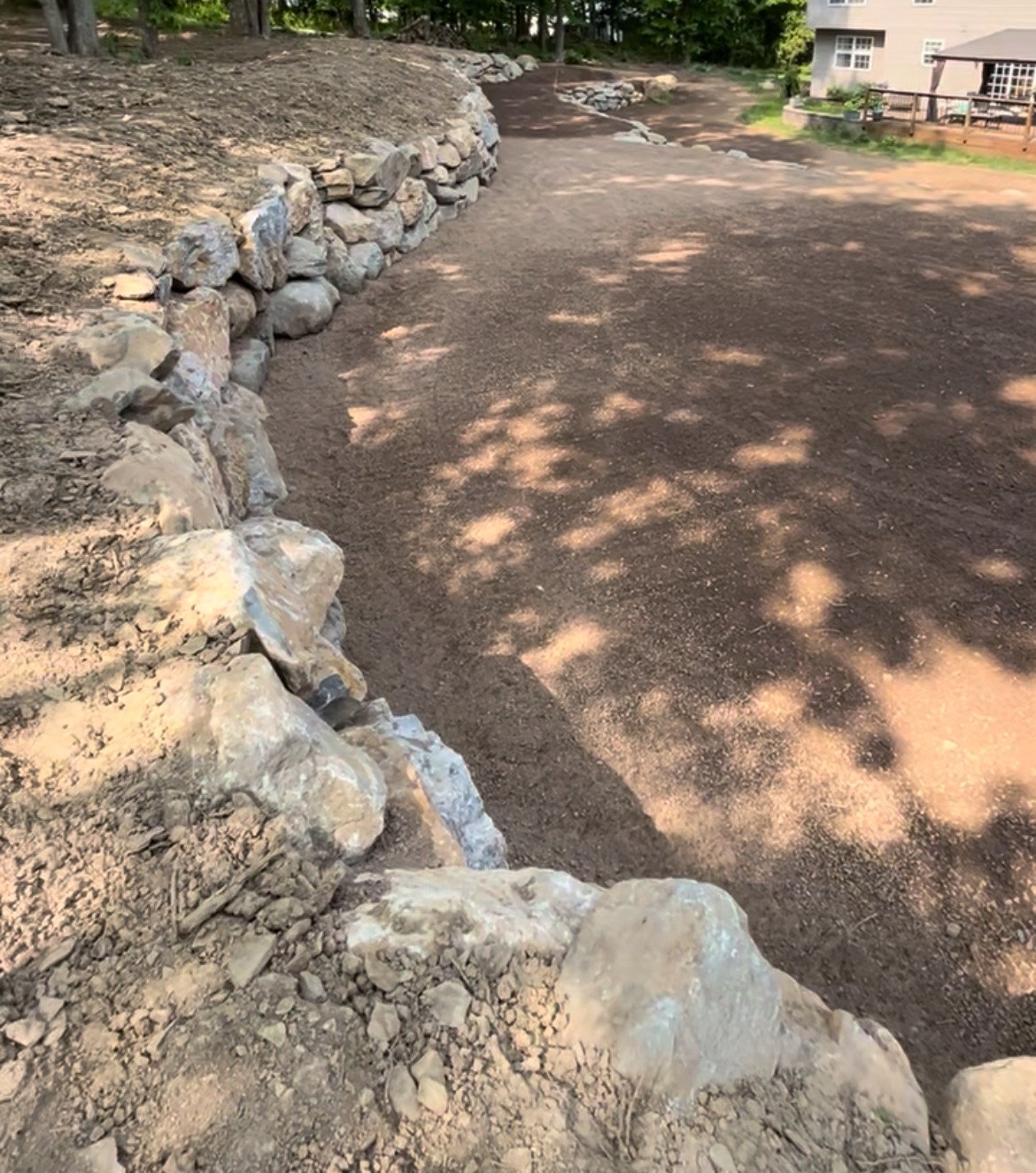
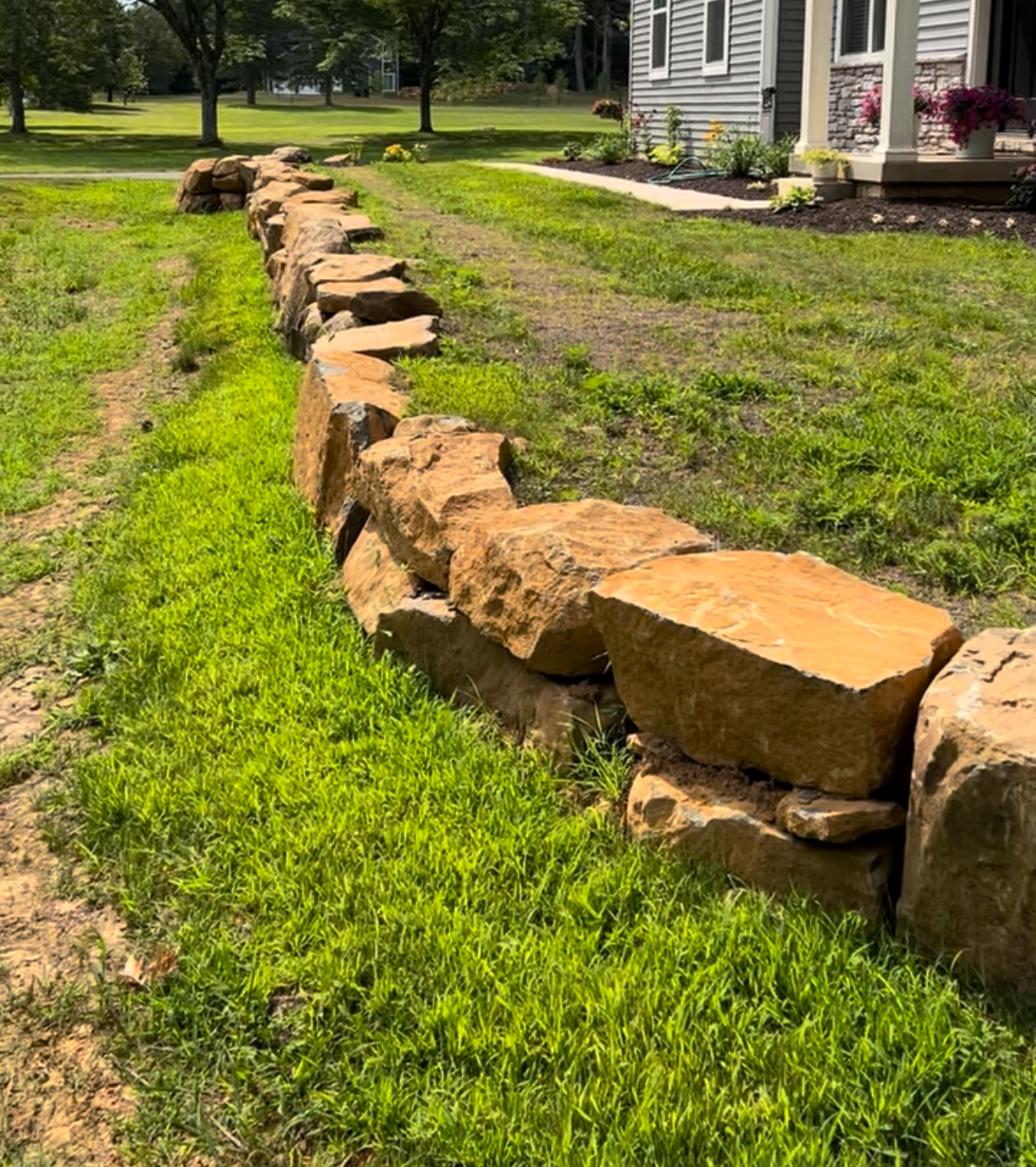
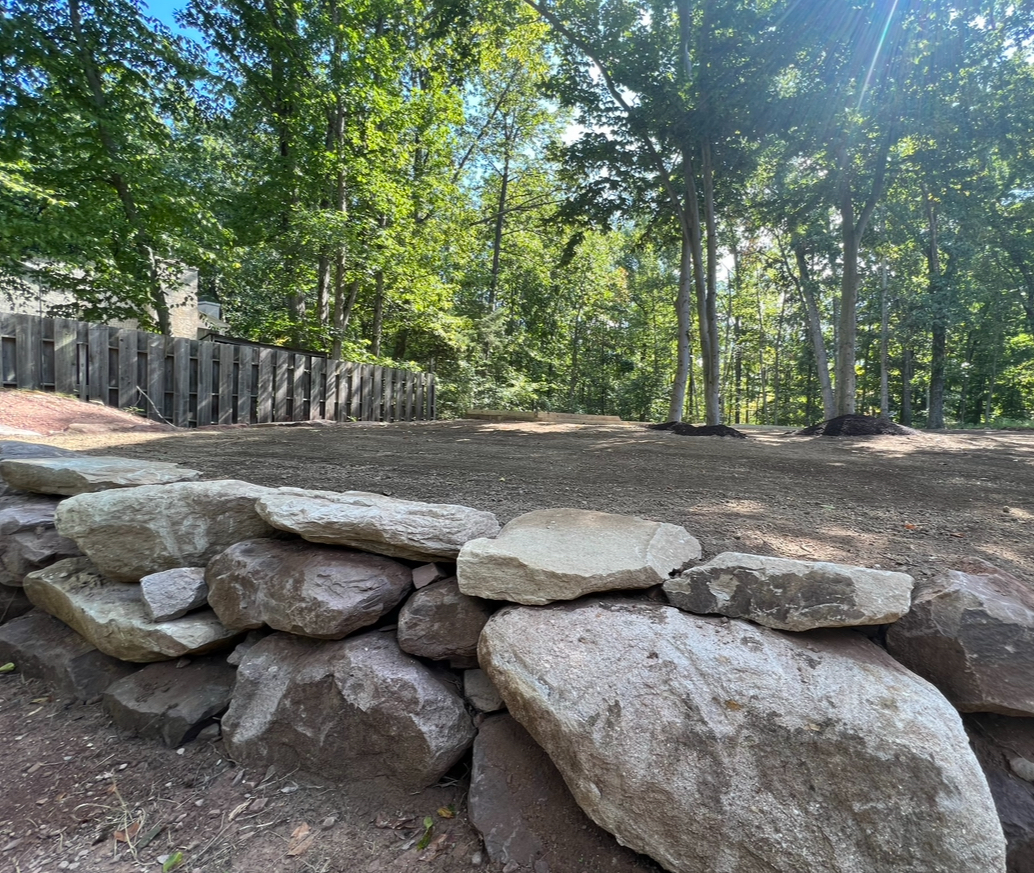
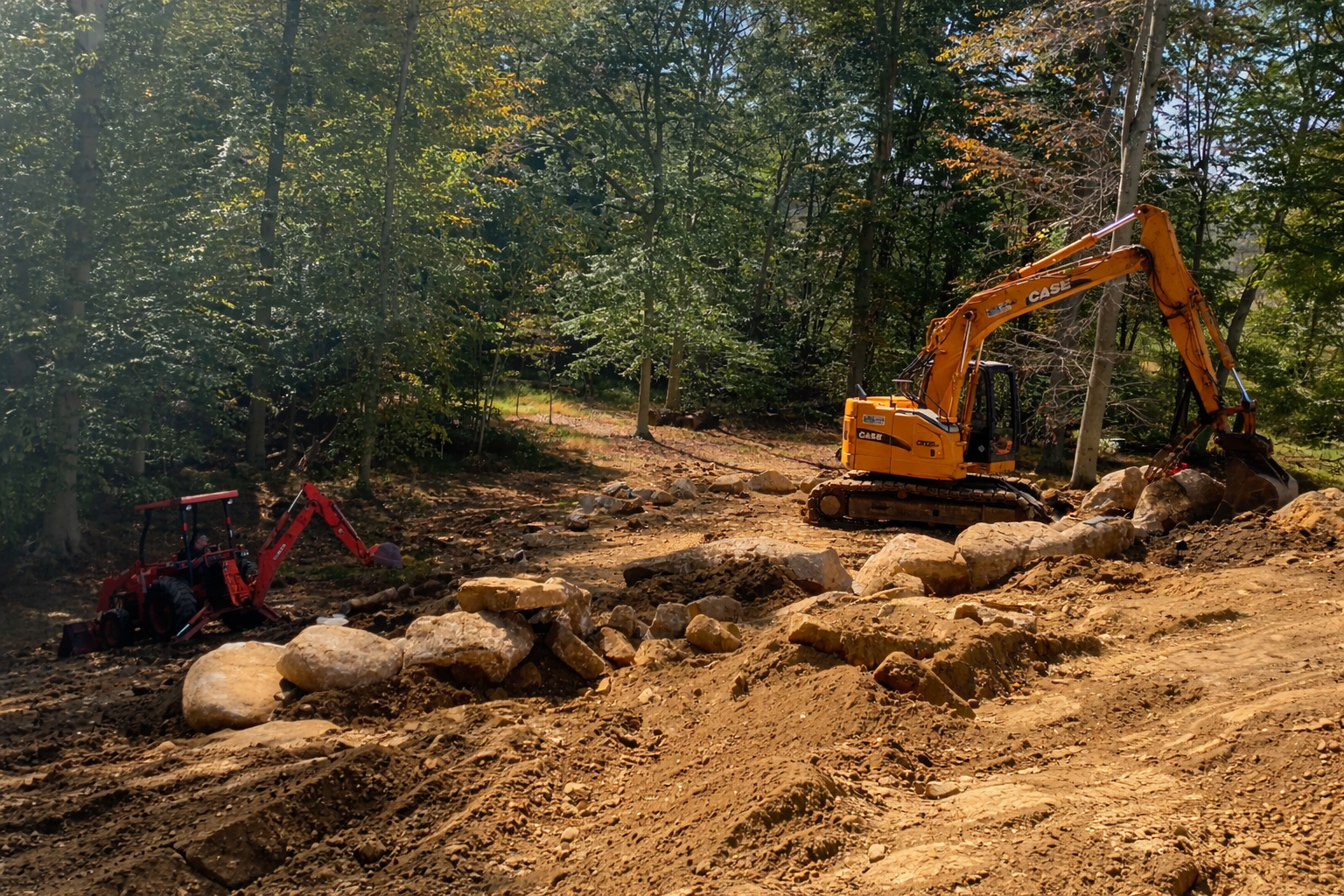
Grading is the process of intentionally reshaping the earth to create both function and stability. Through strategic cutting and filling, uneven or sloped terrain can be reconfigured into level areas suitable for play spaces, patios, pools, parking areas or future structures. On more significant slopes, retaining walls are introduced to establish terraces – creating defined planes of ground that feel purposeful rather than forced.
Beyond usability, proper grading establishes the foundation for everything that follows. It ensures structures sit on stable soil, lawn areas drain correctly and outdoor spaces feel comfortable and secure underfoot. When executed thoughtfully, grading is not simply moving dirt – it is shaping the land to perform better and live more fully.
Let’s reshape your property with clarity and control >>
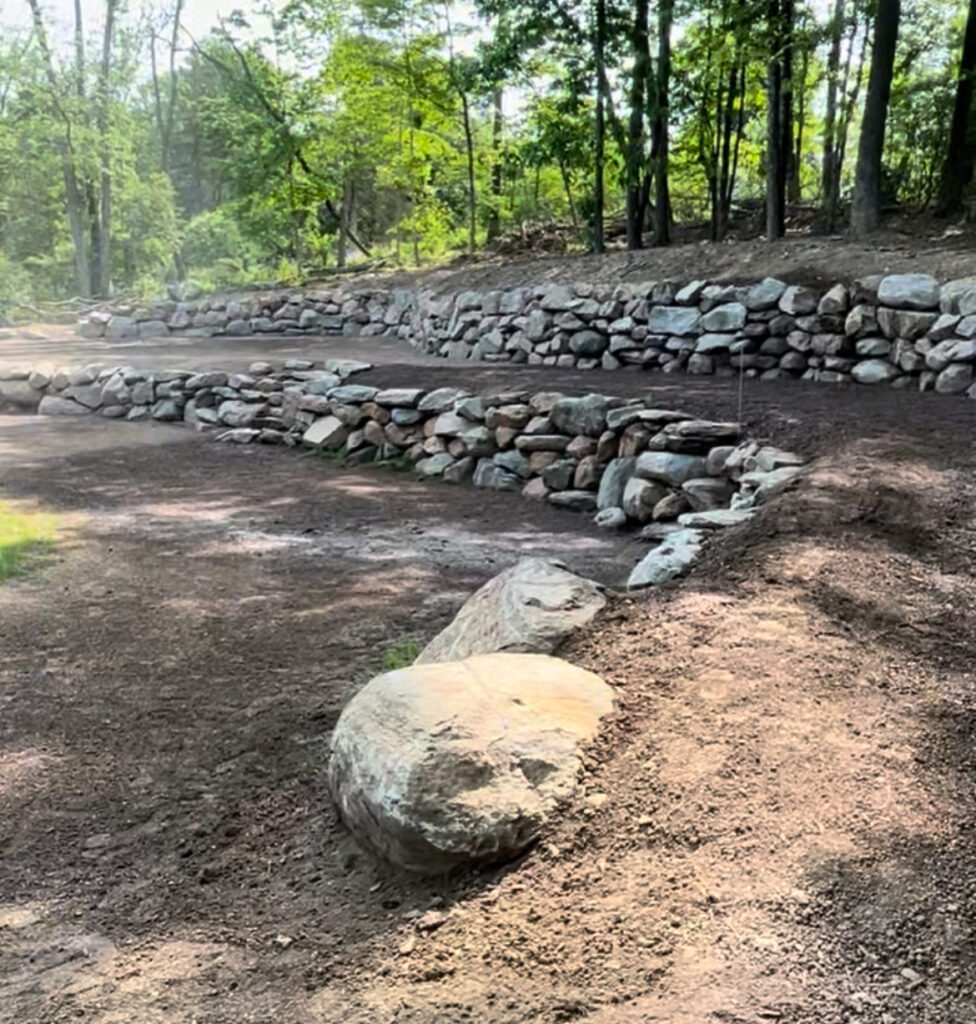
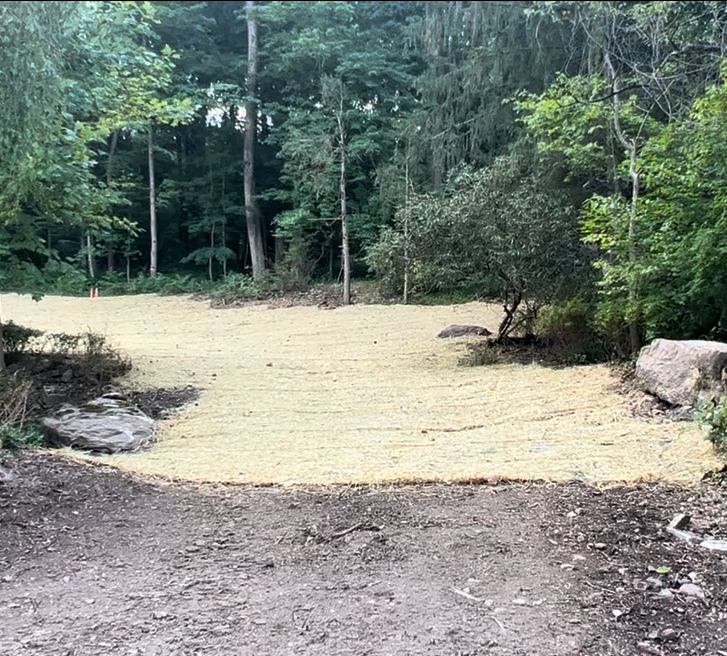
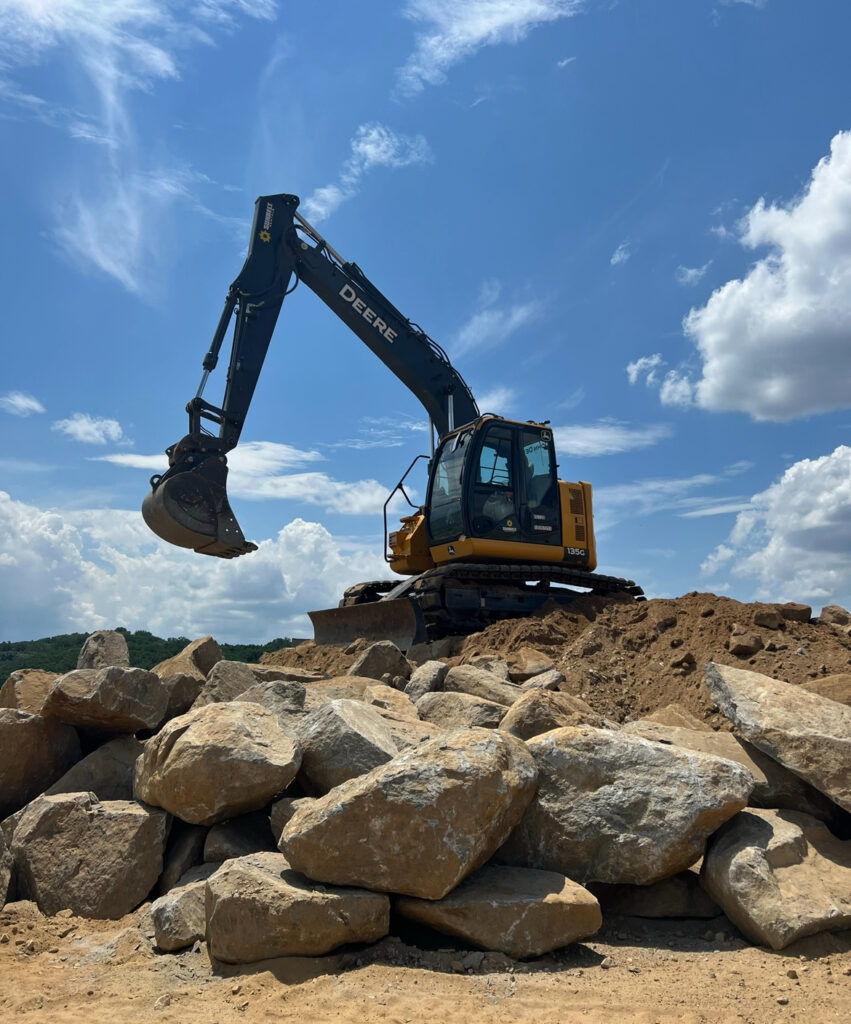
Transforming slopes into stable, usable ground.
Reshape the Land
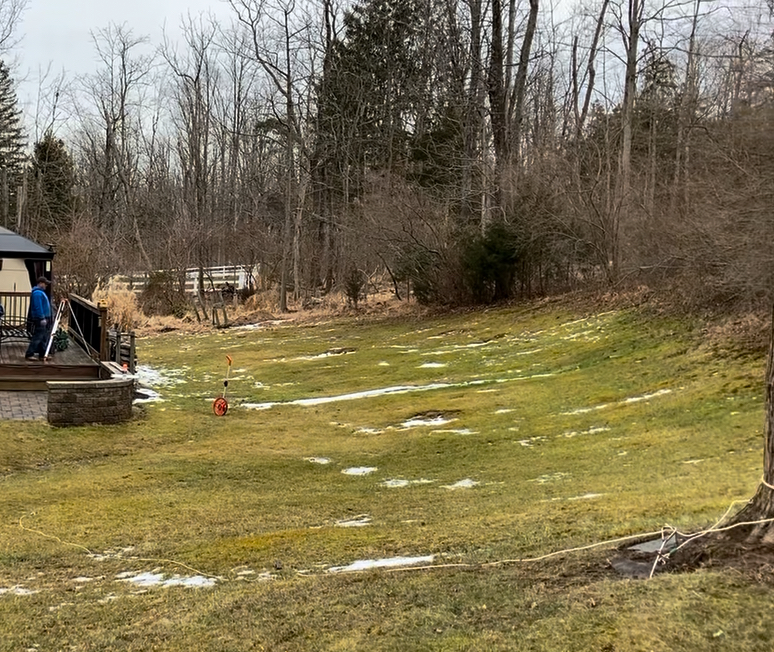
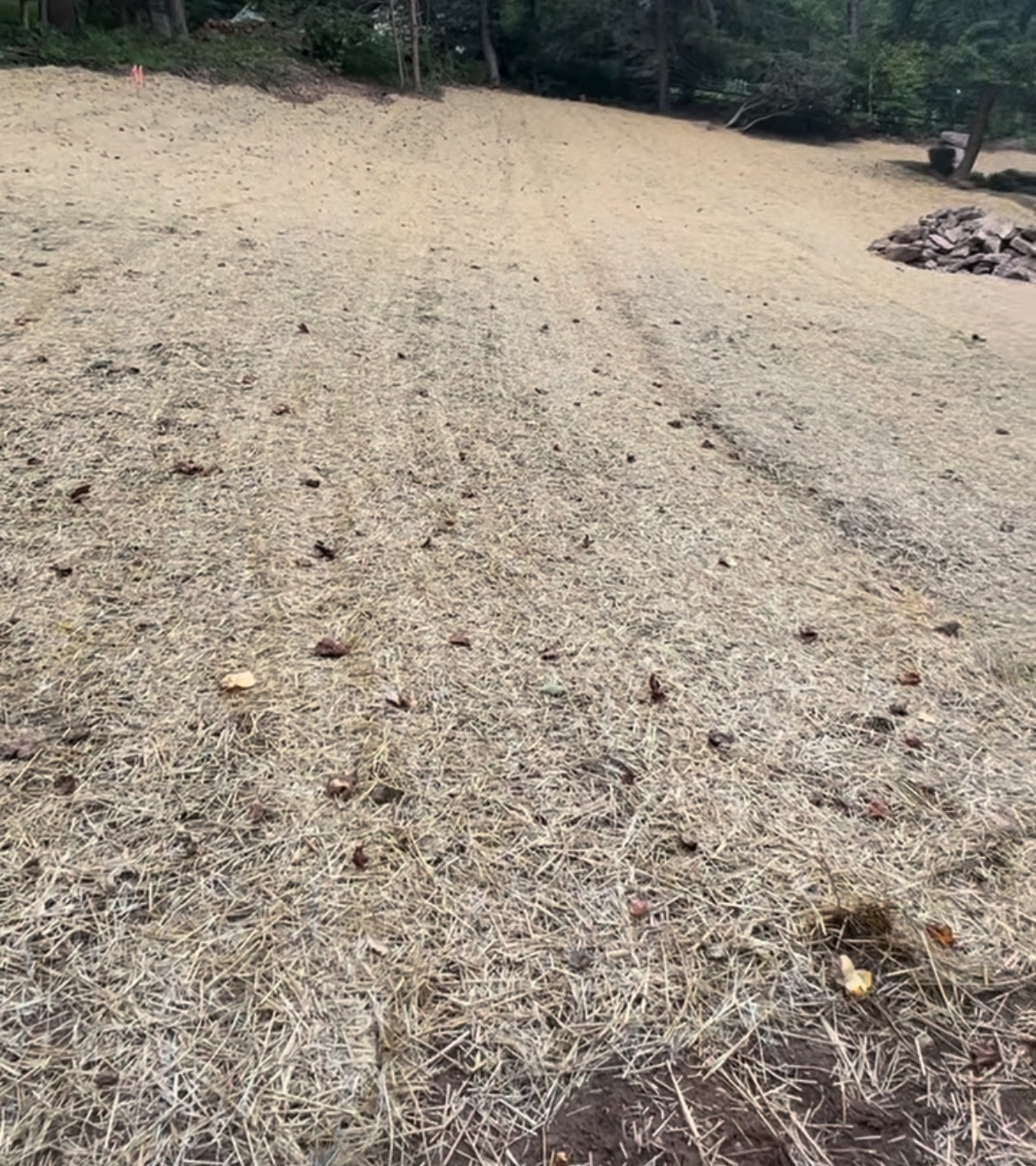
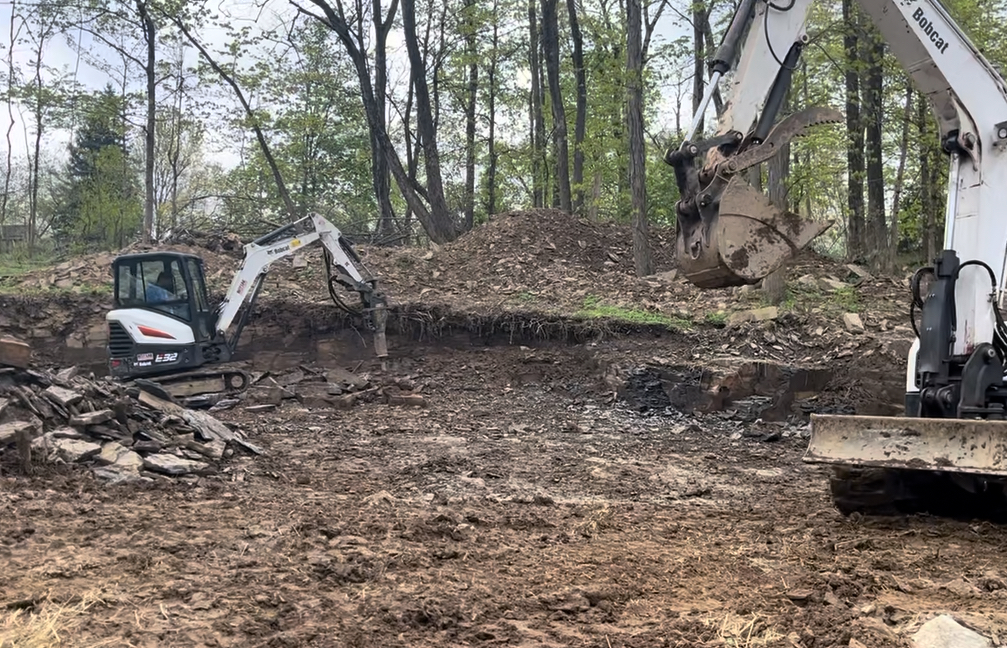
What It's Like Getting Dirty With Us
Turns out, getting dirty is actually a pretty great experience.
Help us fix our yard...
Frequently Asked Questions About Drainage and Grading
Drainage problems have a way of sticking around, and they usually get worse when they’re ignored. Wet, unusable areas of the yard or damp, soggy basements often begin as small puddles that seem to take forever to dry. In many cases, poor grading is the root cause of standing water and drainage issues. Regrading can not only improve drainage but will also create more level, functional and enjoyable outdoor spaces. The good news is that most drainage and grading problems can be corrected with the right solution.
Can drainage problems cause retaining walls to fail?
A lot of designers are highly trained in classrooms and go on to work primarily in an office. They usually never get a chance to work on-site and get hands on construction knowledge. I started working when I was 12, so I spent my early years working with my hands. Learning the on-site construction methods and best building practices, and then I learned the design process. Because of that – I’m able to see potential design flaws before it ever goes into the construction phase. I’m confident when I design something, because I know what it takes to build it. No last minutes price changes because something was missed in the design phase. With us – it’s just a job done right!
Why is my yard always wet?
There are several reasons why yards can be consistently wet, but the most common reasons are; poor grading, compacted soils with a lot of clay content, downspouts and sump pumps that discharge water to one location and additional hardscaping that was added without a plan for water management.
How can I prevent water from pooling near my foundation?
Downspouts and sump pump lines should be buried and extend at least 15′ away from your homes foundation. If your home is older, walk around the perimeter and check for any low spots in the existing lawn or flower beds. Proper grading should be at least 1/4″ of pitch for every 12″ inches of run. (four feet away should pitch down at least one inch)
Can I stop my neighbor's water from draining into my yard?
Housing developments are built and designed for water to naturally flow downhill, so if you’re yard is lower than your neighbors, you are expected to take that water. As long as your neighbor isn’t discharging additional direct water such as; downspout, sump pumps or pool water overflow, or hasn’t changed the grading. You can catch the water and channel it through your yard in a way that functions better and is aesthetically more pleasing.
What is a French drain and when should I use one?
French drains are typically a trench with a perforated drain pipe covered in a “clean” gravel. The water usually seeps through the ground and gravel and into the pipe. They are usually installed behind retaining walls and around the foundation of a structure.
Can I regrade my yard myself?
A “DIY’er” could probably tackle a small grading project to resolve some minor puddling, but it is not suggested for mid to large scale grading projects. Grading usually requires large machines and trucks to bring in or take away large amounts of soil or stone. Most townships also require permits, which usually required engineered drawings and plans. There is also a lot of liability that comes with redirecting water. If your changes cause damage to your neighbors property, you can be held liable. It is best to consult with a professional on any drainage and grading project.
What is positive vs. negative grading?
Positive grading slopes down and away from your home or structure. Negative grading slopes towards your home or structure and creates a “bowl” effect. If your property has negative grading, it is important to ensure a system is in place to move that water away from any foundations.
Can I make my sloped yard more usable with grading?
Yes you can! The use of additional fill dirt and topsoil can certainly create more usable space. Depending on how steep the slope is, and how much “run” you have, you may also need to install retaining walls to hold up the newly leveled surfaces.