Water Features
The sound of water changes everything. It brings motion, reflection, and a calming presence to the outdoors.
The Language of Water
Water features introduce a dynamic element to the landscape — one that can be heard, seen, and felt. Whether a naturalistic pond edged with stone, a cascading waterfall integrated into a slope, or a structured fountain anchoring a formal garden, water reshapes the experience of the space. It softens hardscape, reflects architecture, and creates a sense of movement even in still settings.
Designed thoughtfully, water features can be remarkably low maintenance while remaining visually striking. They can be constructed using natural stone and liners for an organic feel, or crafted from concrete, brick, steel, or aluminum for a more contemporary expression. Fish, aquatic plantings, submerged lighting, and even reclaimed wood or moss can be integrated to enhance authenticity and depth. The result is not simply decoration — it is atmosphere.
Fountains
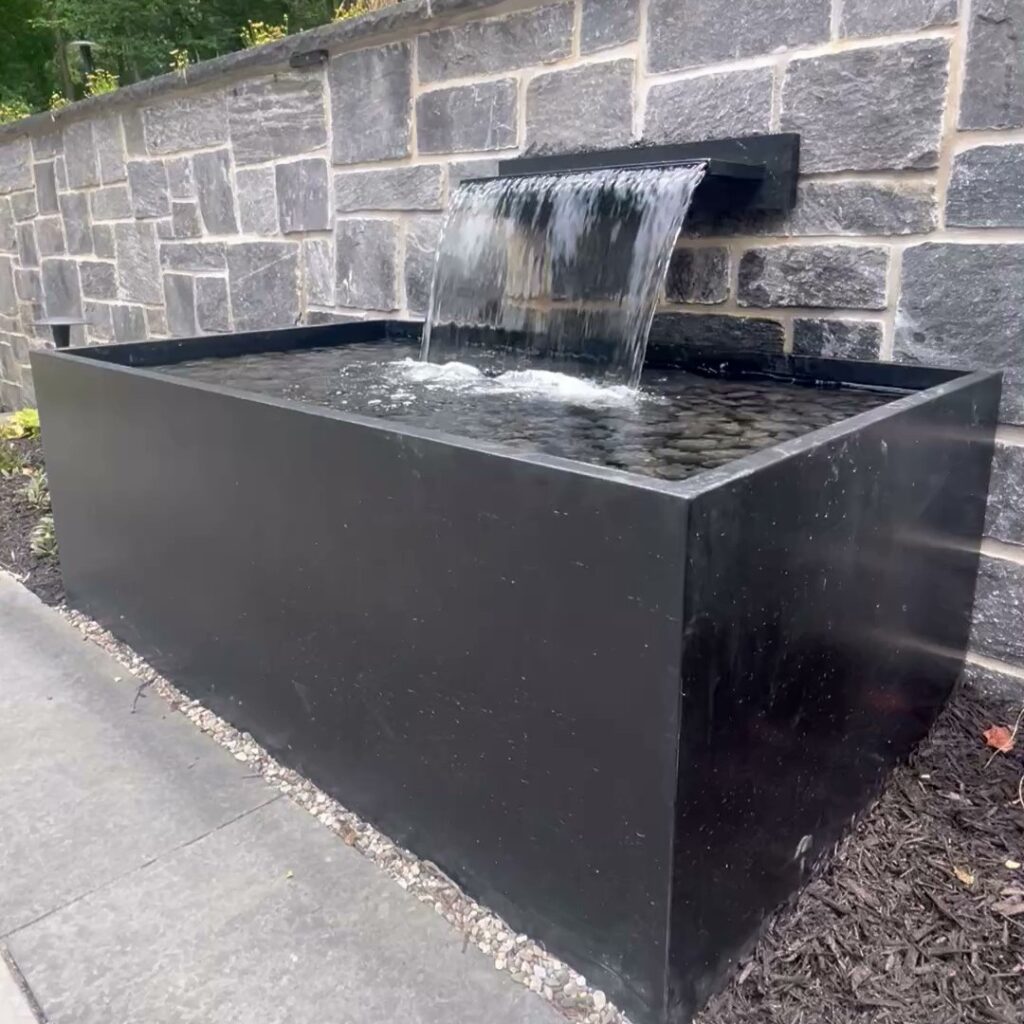
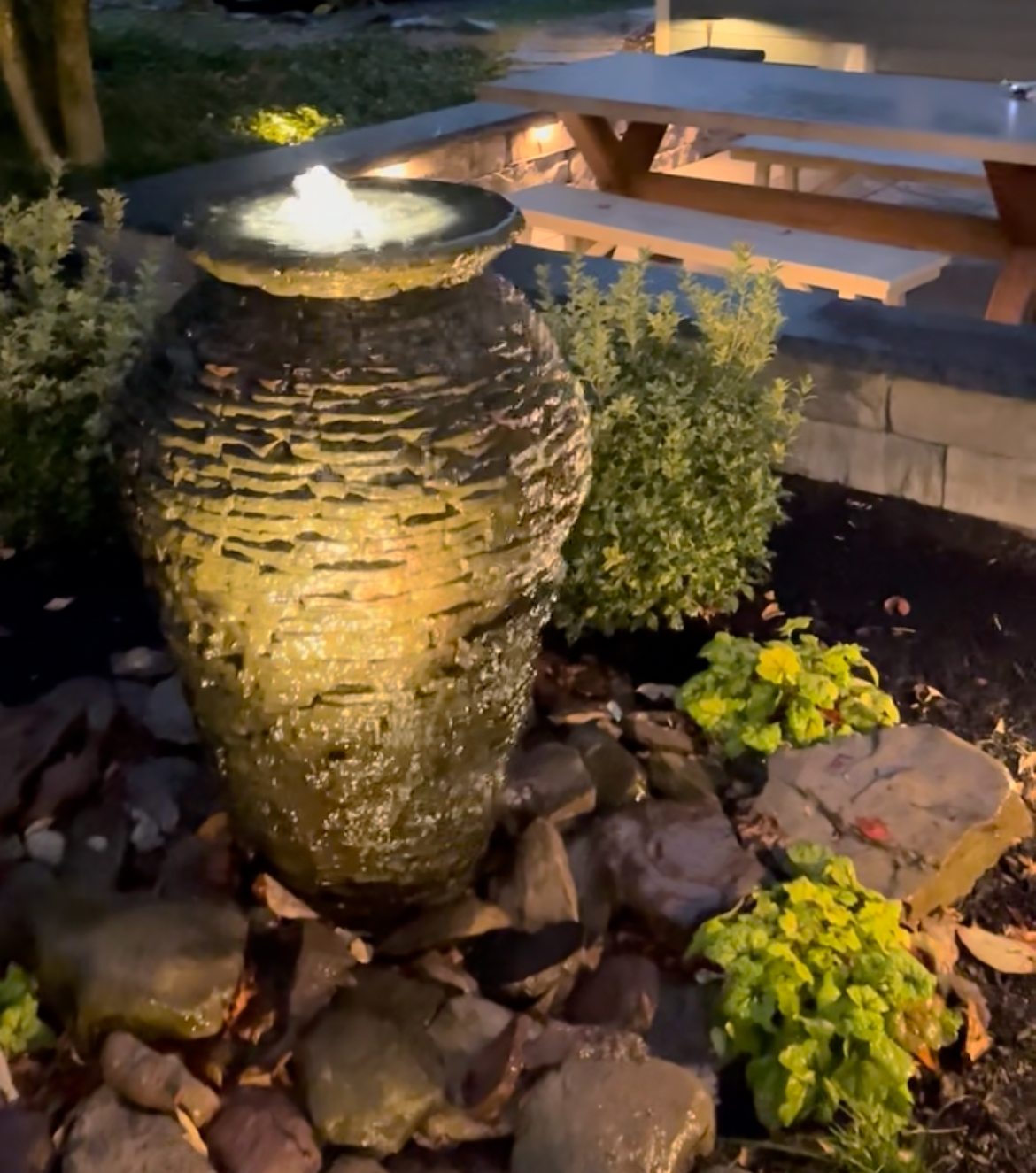
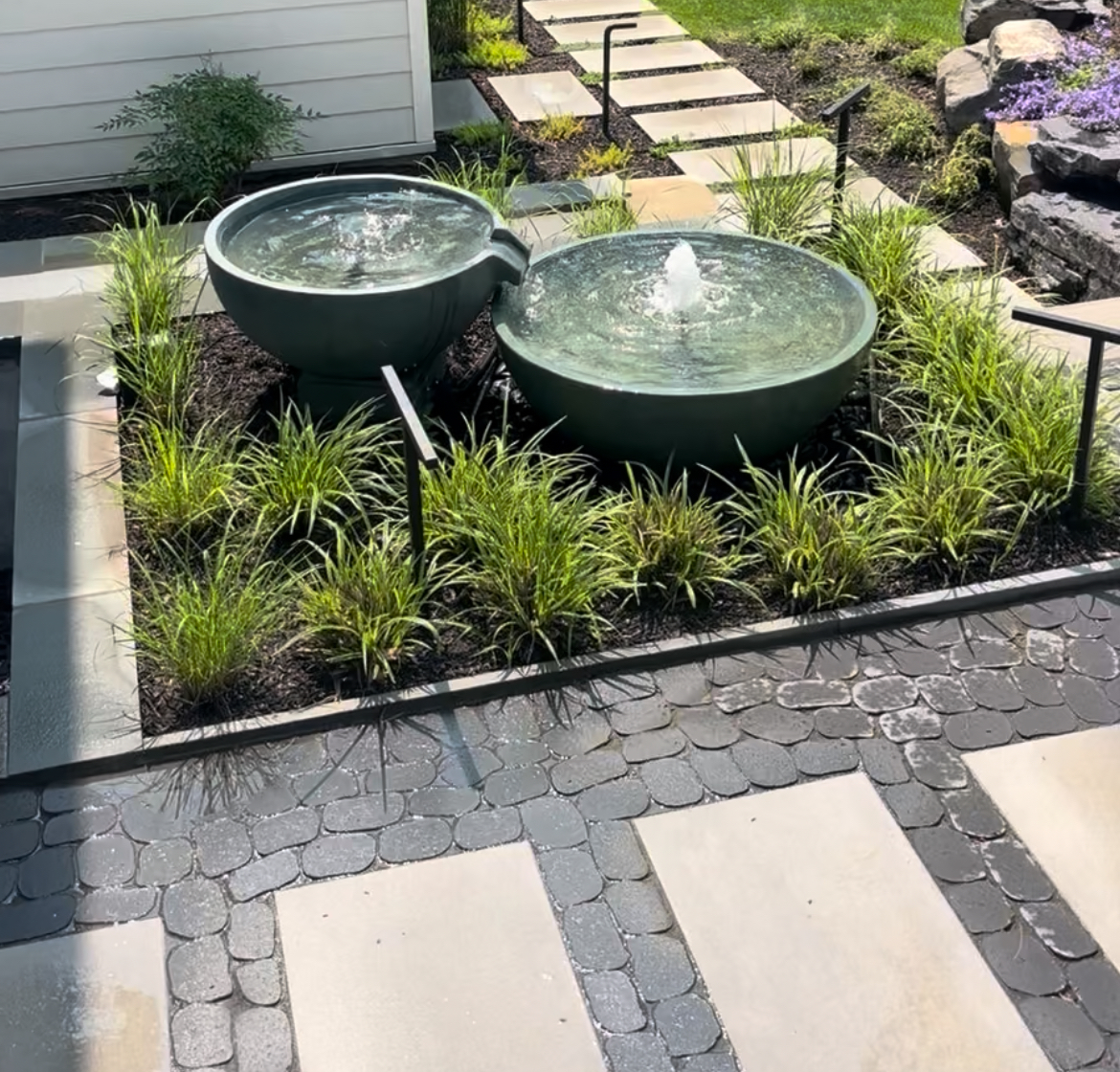
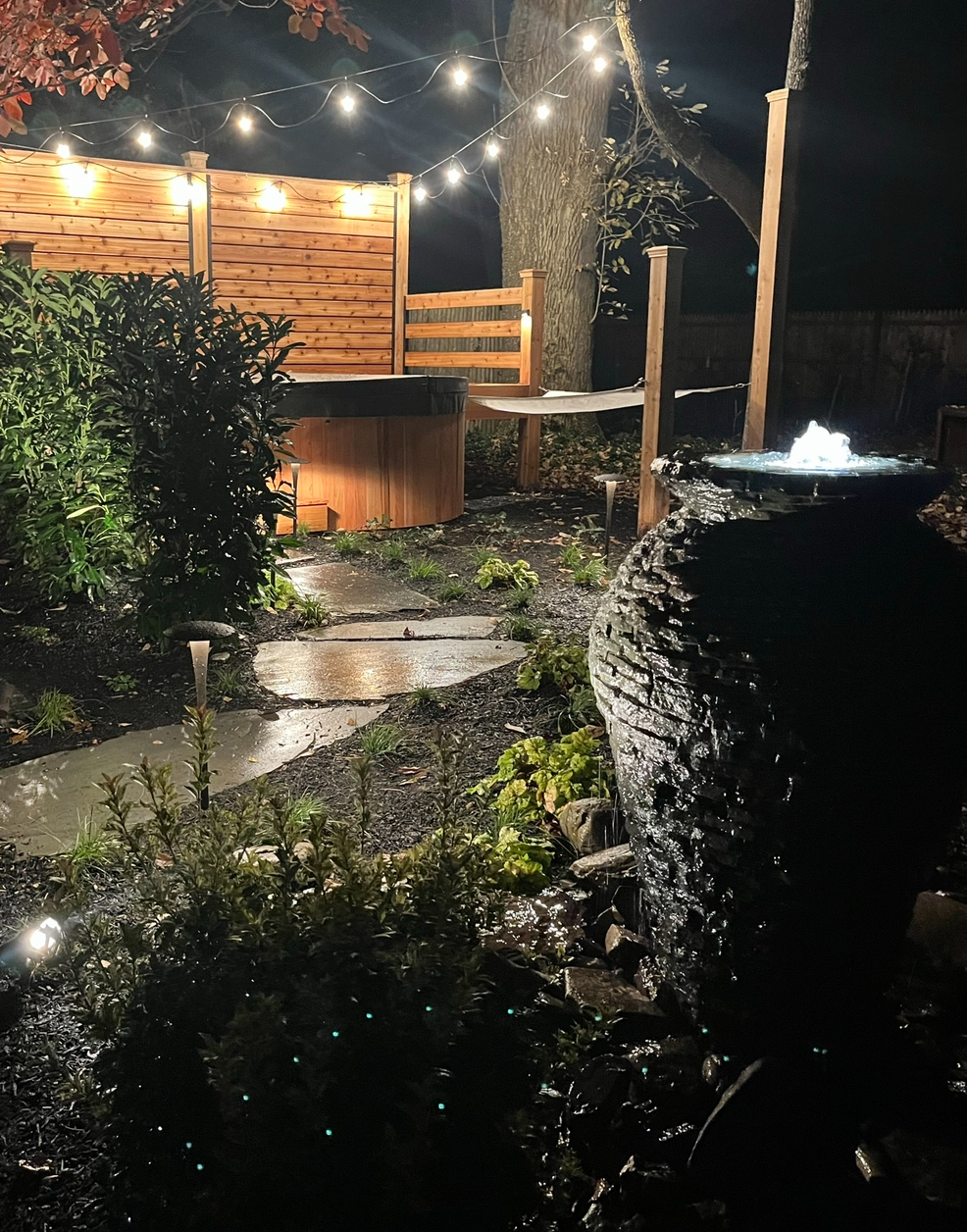
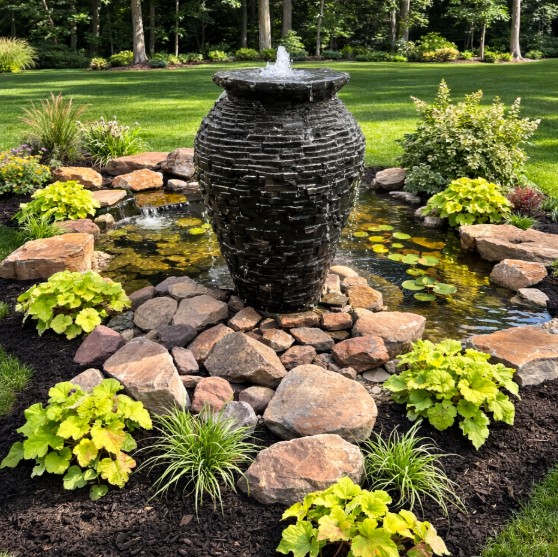
A fountain is intentional and architectural. Whether formal or contemporary, built in stone, concrete, brick, aluminum or steel, it delivers movement and sound in a controlled, composed way. The visual presence is clean and refined – the water spilling or cascading with precision. Fountains are ideal when you want the elegance and sound of water without the scale of a pond or waterfall – a sculptural focal point that adds energy, rhythm and ambiance to the space.
Ponds and Waterfalls
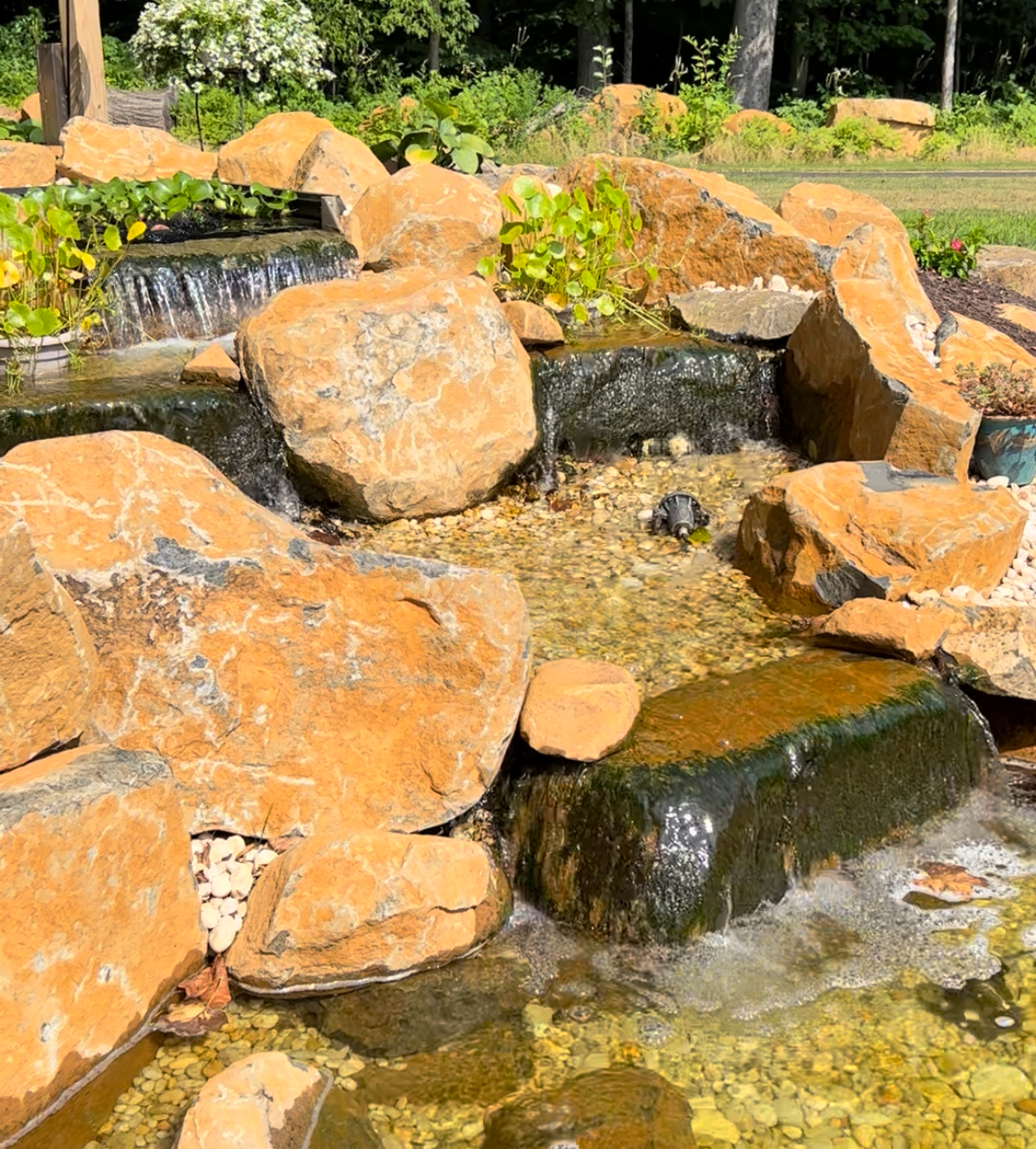
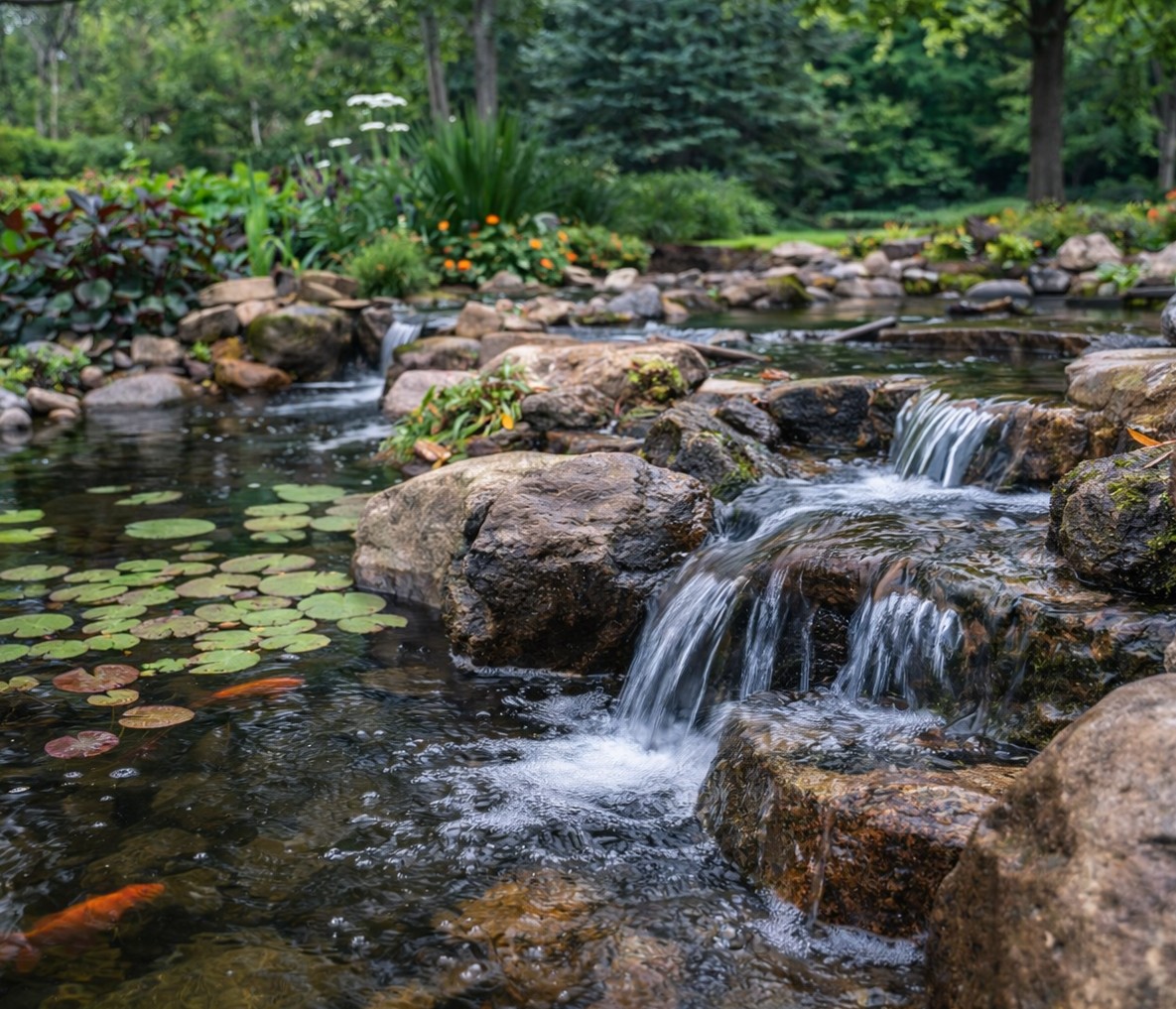
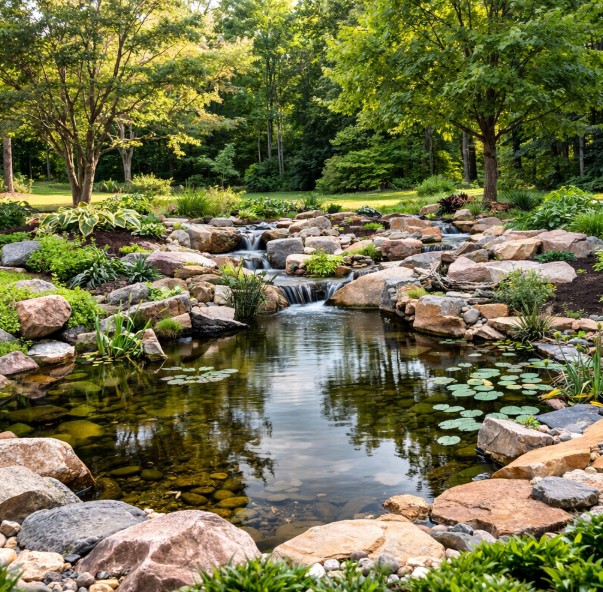
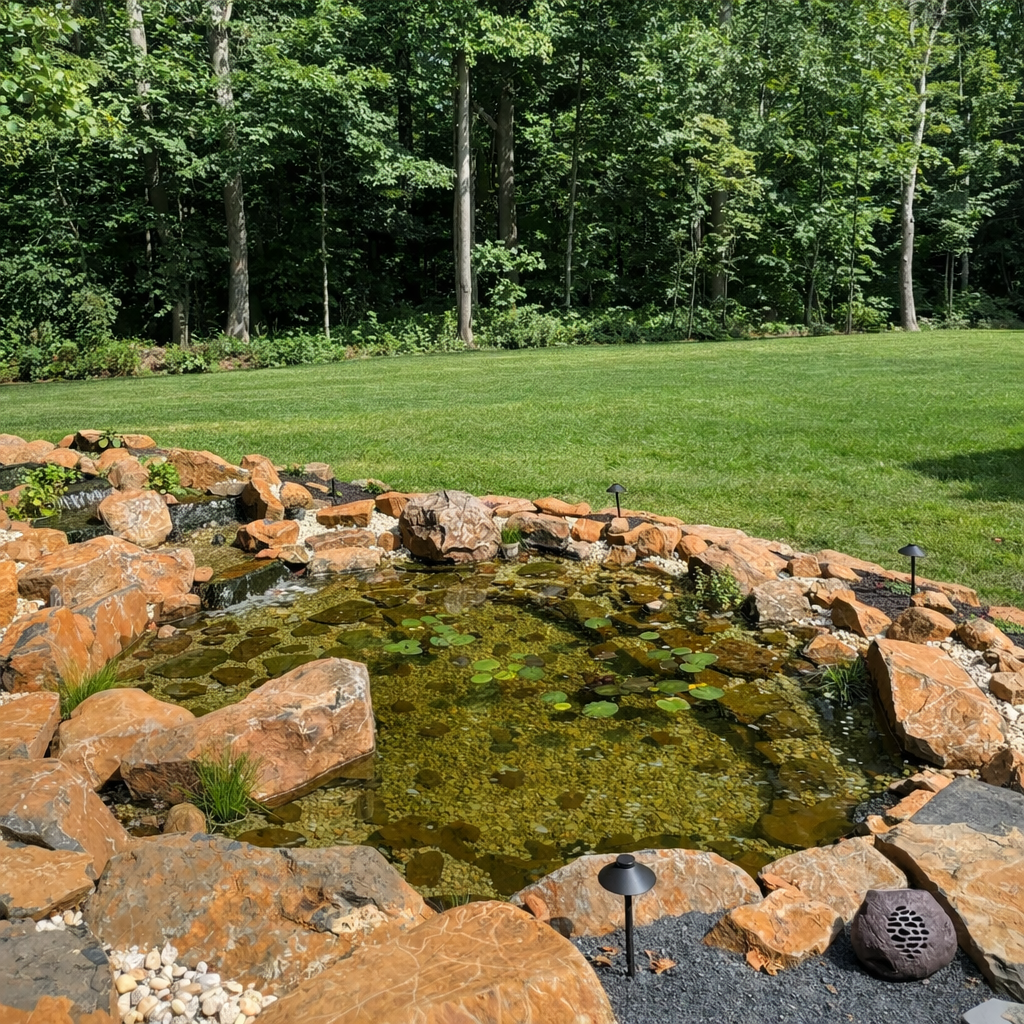
A pond feels natural, immersive and alive. Framed with rock, softened by aquatic plants and sometimes home to fish, it becomes a small ecosystem that changes with the seasons. The sound of water moving over stone, lily pads resting on the surface and subtle underwater lighting create depth and atmosphere that draw you in. A pond is less about ornament – and more about creating a place where landscape, wildlife and water coexist in harmony.
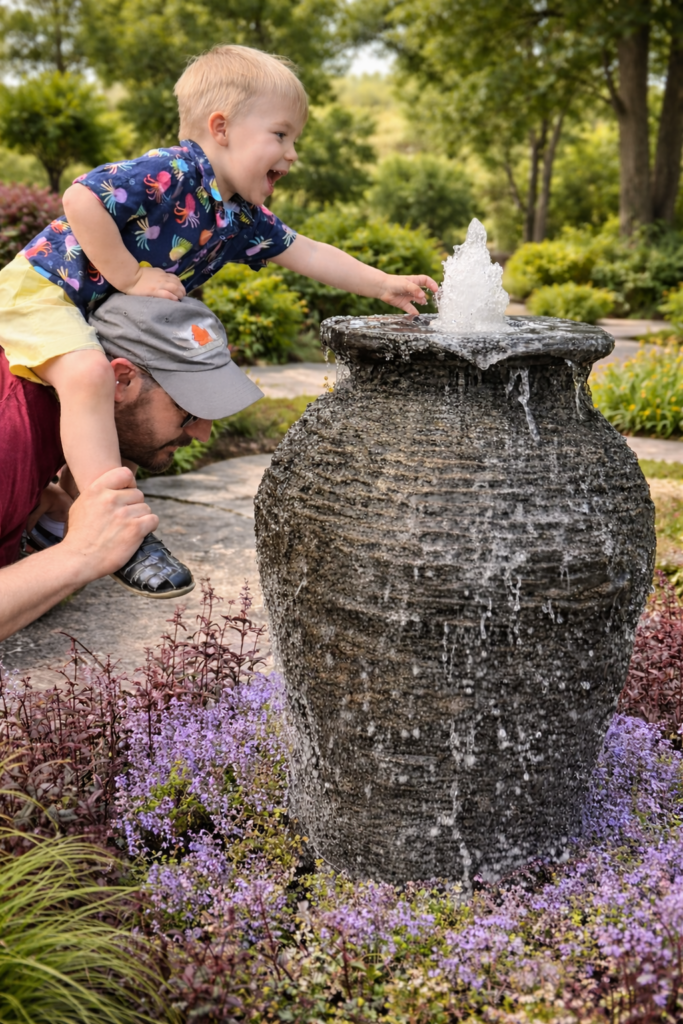
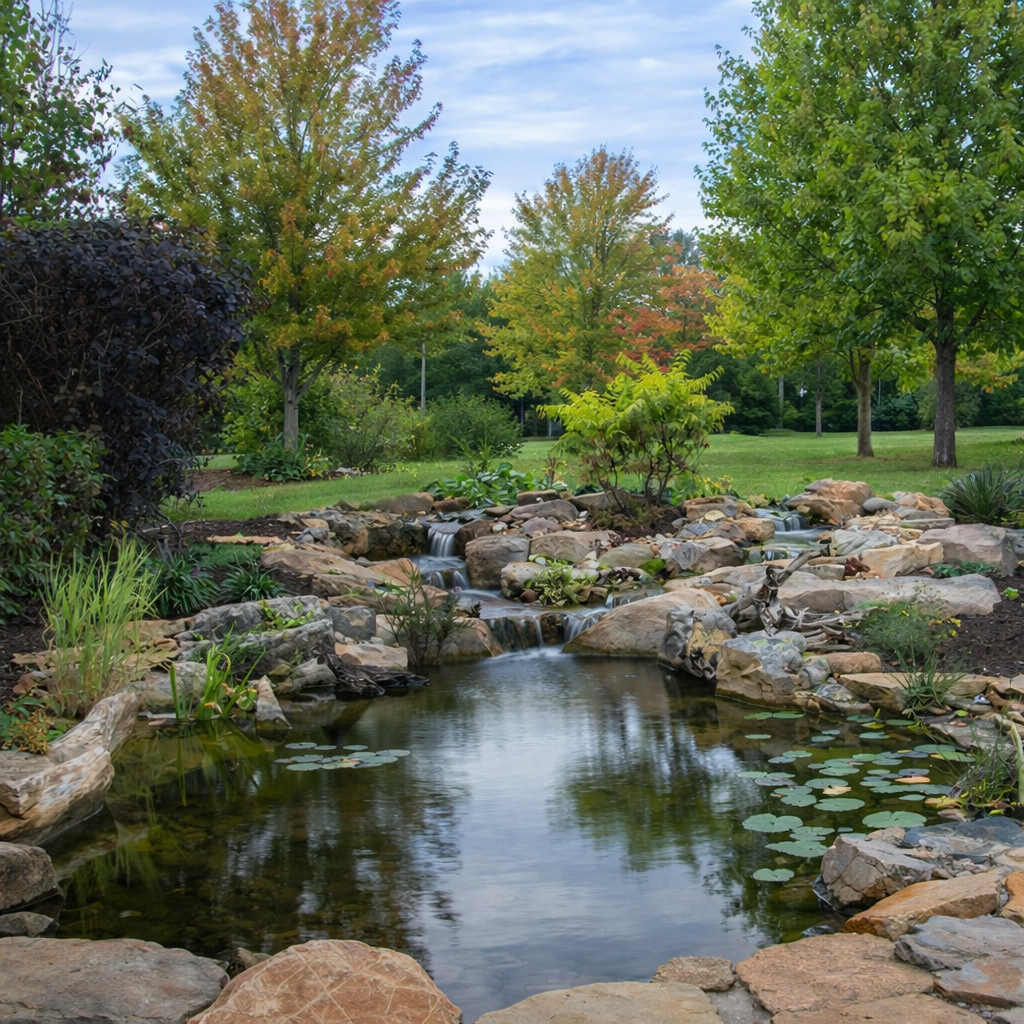
Some water features are designed to feel discovered. Others are composed with intention. The right choice depends on how you want water to live within your landscape.
Living Water - Sculpted Water
What It's Like Getting Dirty With Us
Turns out, getting dirty is actually a pretty great experience.
Ready to splash around like a kid again?
Frequently Asked Questions About Ponds, Waterfalls and Fountains
Adding water to a landscape is not just about installing a feature – it’s about introducing movement, sound and life into your environment. When designed properly, it feels timeless. When rushed or improperly built, it becomes a source of frustration. Take your time. Ask thoughtful questions. The right designer will guide you through materials, maintenance, placement and long-term performance with clarity – not pressure – so your investment feels peaceful from day one.
How much maintenance does a pond or fountain really require?
Ponds with fish and aquatic plants require seasonal attention, while fountains are typically very low maintenance with simple cleaning and winter pump care. The key is thoughtful design from the beginning: proper filtration, circulation, and access points make upkeep predictable and manageable. When built correctly, maintenance becomes routine – not reactive.
How much do ponds and fountains cost?
Every water feature is unique to the property and homeowner they’re built for. Here are some numbers to help guide you in your water feature journey. Small decorative fountains such as Spheres, Urns and Spillway Bowls start at $6,000.00. Pond less waterfalls with six foot stream start around $15,000. Small 8′ x 10′ entry level ponds start at $19,000.
How big should my pond be if I want fish?
If you’re planning to include fish, depth becomes just as important as overall size. In our region, ponds should typically be at least 24 inches deep to protect fish from freezing temperatures, overheating and predators. Adequate water volume also supports proper filtration and helps maintain stable water quality, which is critical for fish health. Rather than sizing a pond around the minimum requirement, we design it to create a balanced ecosystem that feels natural and performs reliably over time. We recommend not going smaller than 11′ x 16′ if you’re looking to add fish.
Do I need a fence around my pond?
Most townships and municipalities do not require fencing around ponds and/or waterfalls. It is always good to contact your township or municipality before starting your project.
Do ponds and fountains attract mosquitoes?
Moving water does not attract mosquitoes – stagnant water does. Properly designed features incorporate circulation and filtration that prevent breeding conditions. In fact, ponds often attract beneficial wildlife like birds and pollinators, enhancing the ecosystem of your yard.
Does my yard need to be on a hill to make a waterfall?
Not at all. The most natural looking streams and waterfalls can be the ones with the least amount of pitch or drop. Elevation changes, streams and waterfalls are usually created with the soil that’s dug up during the construction of the pond.