Outdoor Living For New Homes
A smoother, more thoughtful approach to design and construction – extending your new home beyond its walls.
This isn’t about choosing another contractor or a bunch of people you have to manage. This is about choosing the right partner for your project.
A Clean Slate
Your home is finished. The decisions have been made, the process is behind you and everything inside is finally where you want it to be.
Step outside, and it’s a different story.
An open lawn. A concrete walkway or patio. Just some open space with no flow and no purpose. The space is there and the ideas are in your head.
And if you’re being honest, the idea of starting another project probably isn’t all that exciting.
After everything it took to build the house. Constant decisions, the delays, pour communication and costly mistakes. Most homeowners aren’t excited for more of the same when it comes to another project. That’s exactly why this phase should feel different.
For some, it’s about creating outdoor spaces that extend the home – patios, pools, decks, gardens and lighting that feel connected, not added on. For others, it’s about shaping the property itself – grading to create more usable space or planting large trees to add privacy. These items bring comfort, usability, and long-term performance.
Our role isn’t just to design and build the outside. It’s to make the entire experience feel clear, organized, and well-managed from the start – so you’re not chasing updates, questioning decisions or wondering what happens next.
A custom home is built with intention – every line, every material, every proportion carefully considered.
The exterior should be no different.
Too often, outdoor spaces are treated as a separate project. Different materials. Conflicting styles. Layouts that ignore how the home was designed to function. The result feels disconnected – like it was added later instead of planned from the beginning.
We take a different approach.
Everything outside is designed to align with the homes style and architecture – from material selection and layout to elevation changes, transitions, and sightlines. Patios and decks feel like natural extensions of the interior. Walkways guide visitors through spaces and to their destination. Plantings soften and frame the structure without overwhelming it. Lighting extends living well into the evening, while highlighting specific aspects of every space.
Nothing competes. Nothing feels forced.
It all works together – so the home and property feel like they were designed as one complete environment from the start.
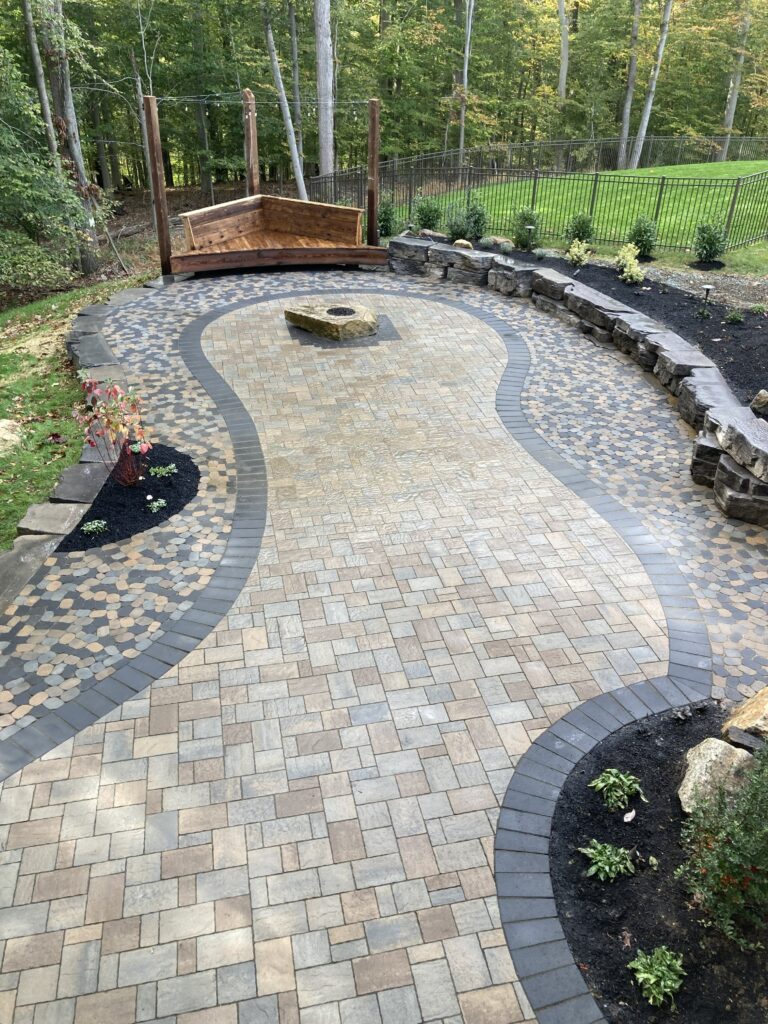
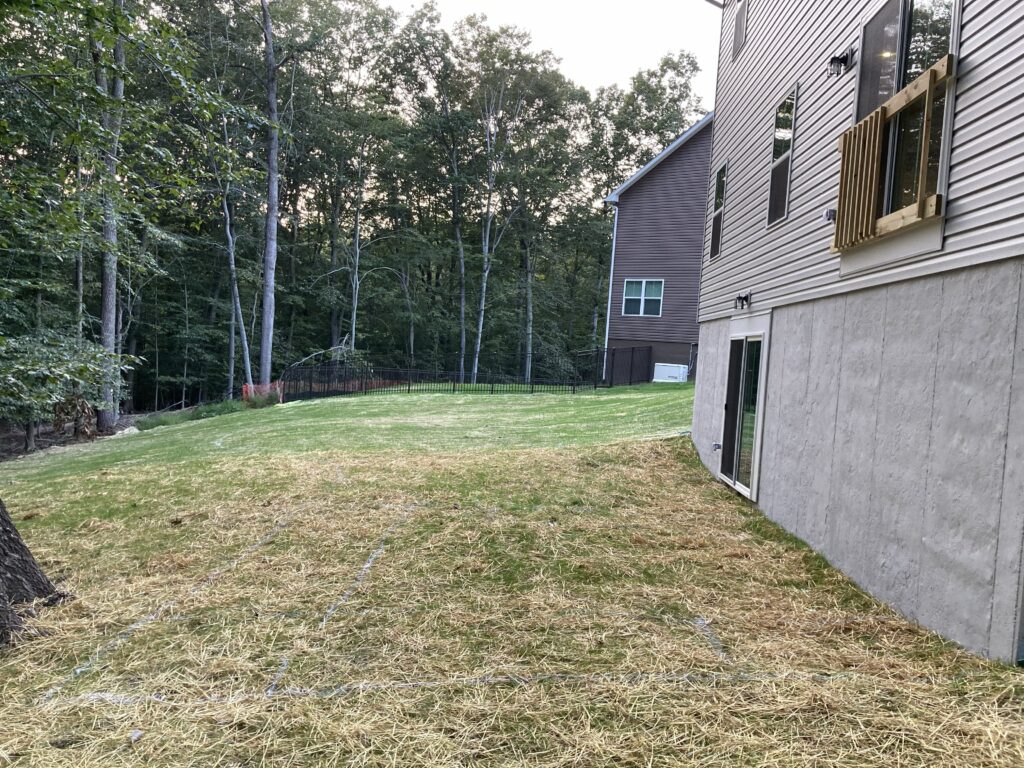
So everything outside feels like it was planned from the beginning
A Design That Complements Your New Home
REAL PROJECT SPOTLIGHT
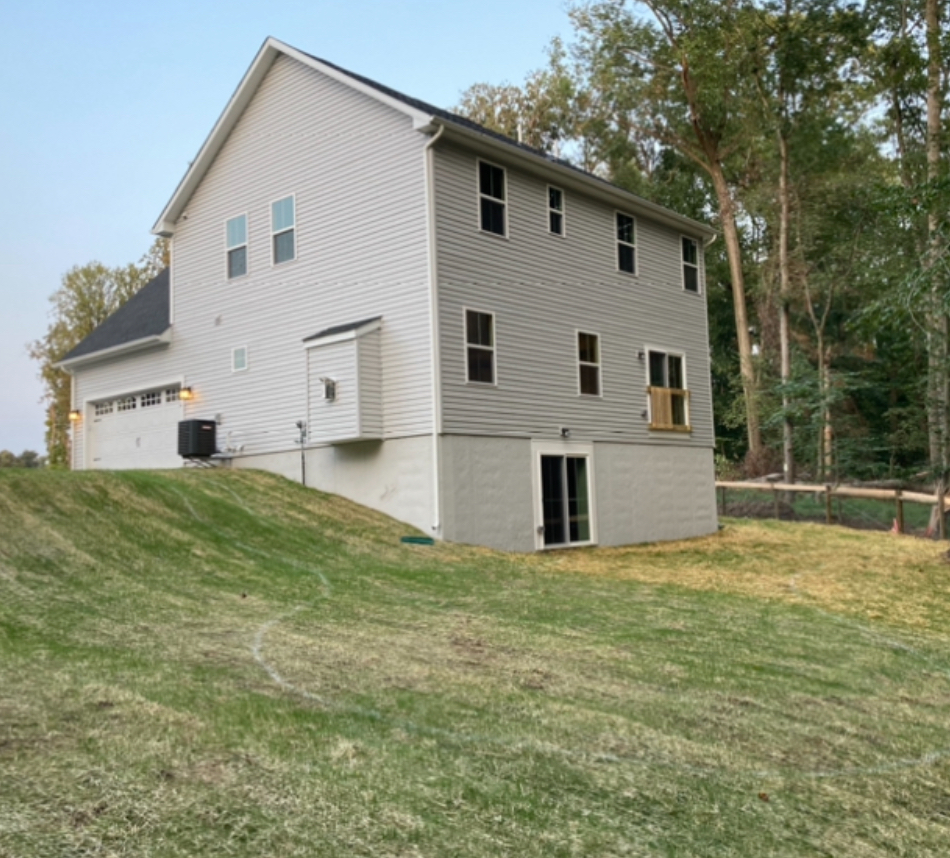
New Custom Home Built in East Bradford, Chester County, PA
The Dirty Details
- Create a safe way from the driveway down to the backyard
- Design and create multiple spaces to fit on this odd shaped lot
- Build a second floor deck without going past the building envelope
- Don’t obstruct views of the woods
- Create a unique gathering space in the lawn
Terracing an Unusable Yard
What started as a steep, underutilized backyard is now a fully designed outdoor living space built for both function and experience.
The elevation change made the space difficult to use and disconnected from the home. By introducing a second-story deck with composite decking and a clean, modern railing system, we created a natural transition from the interior living space to the outdoors. From there, the design steps down onto a large paver patio – carefully composed with multiple textures and tones to add depth without overwhelming the home.
Terracing the yard allowed us to define purposeful areas throughout the space. A custom seating area, built with reclaimed white oak, creates a warm and inviting gathering space beneath softly lit bistro lights, centered around a gas-powered fire feature. Structural support is seamlessly integrated using a combination of natural and cast boulders, stabilizing the grade while reinforcing a natural, grounded aesthetic.
Movement through the space was just as important as the destinations themselves. Large stone steps guide you up the hillside, while surrounding plantings of shrubs and perennials provide year-round color, texture and privacy.
As the sun sets, low-voltage lighting brings the entire space to life – highlighting key features, enhancing safety, and creating an atmosphere that feels just as intentional at night as it does during the day.
What was once unusable is now fully connected, highly functional, and designed to be lived in.
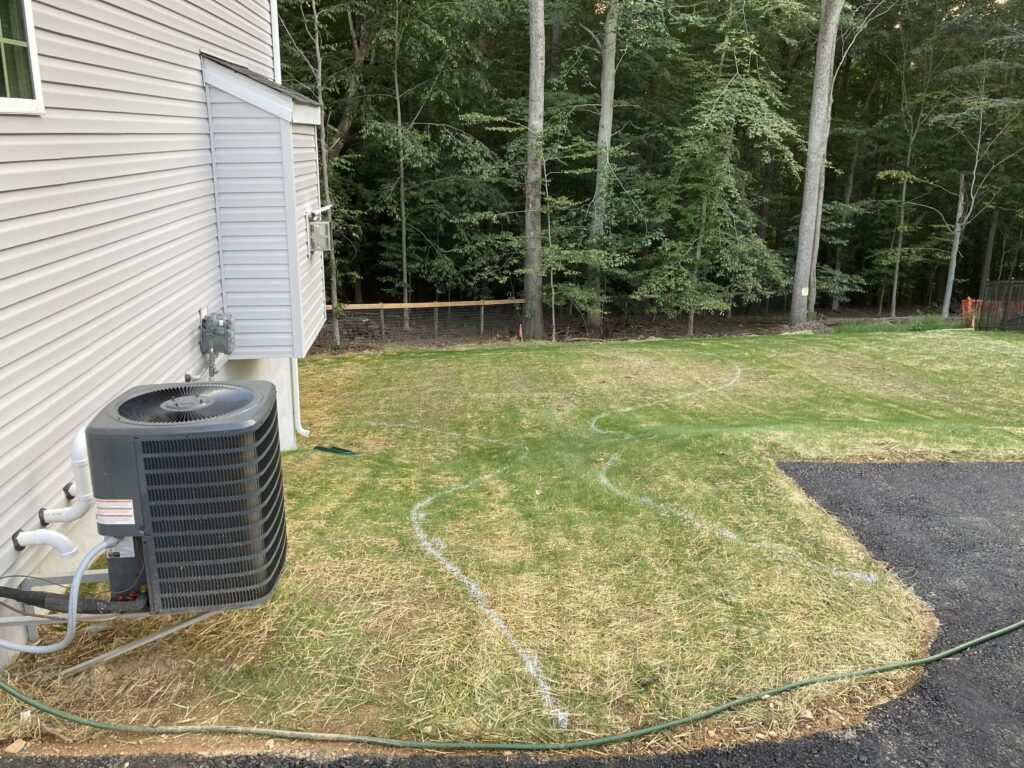
After construction, the homeowner was left with a steep slope going to the backyard
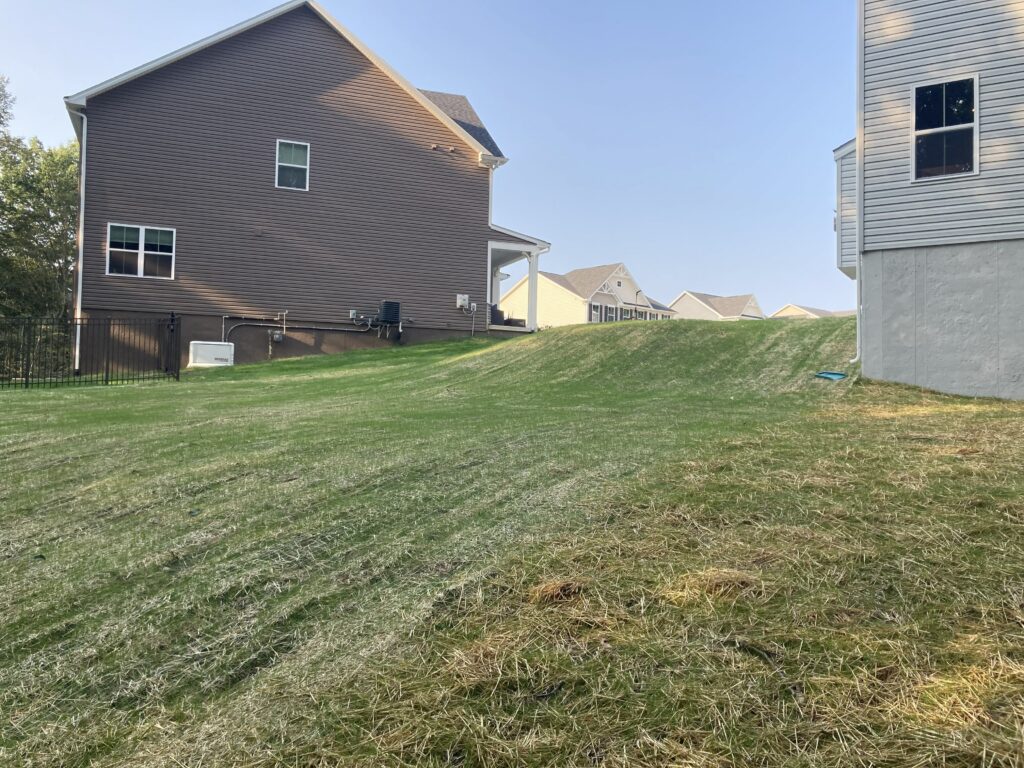
This photo shows over ten feet of elevation change from the back property line
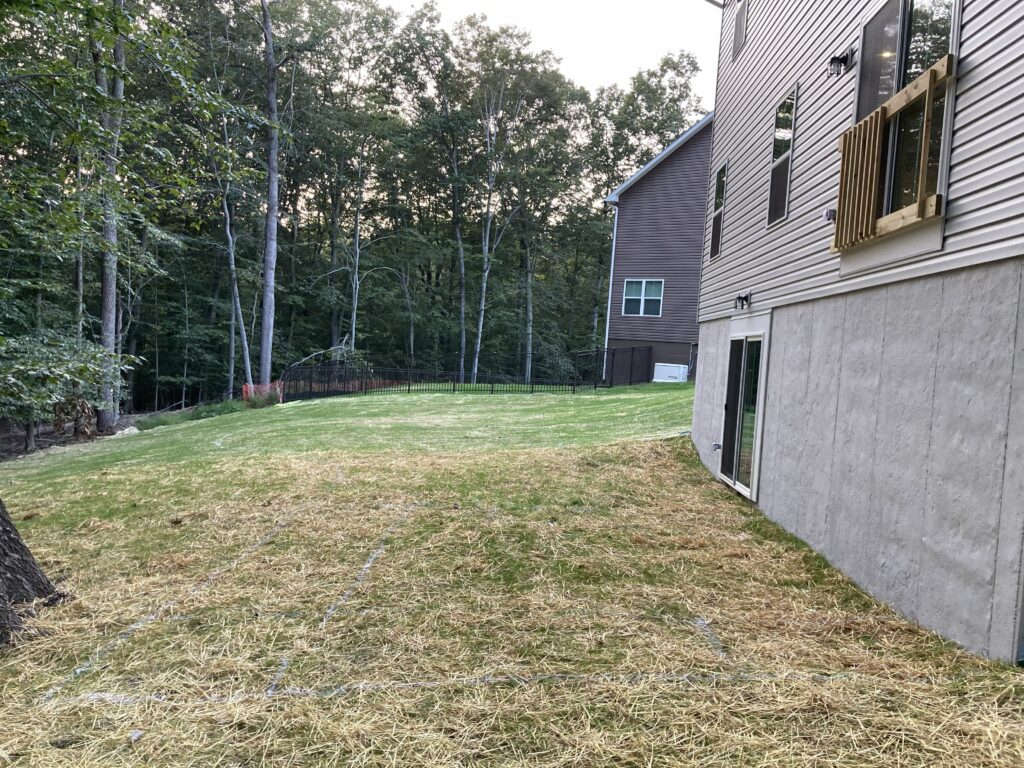
The view across this long backyard shows some of the grade changes
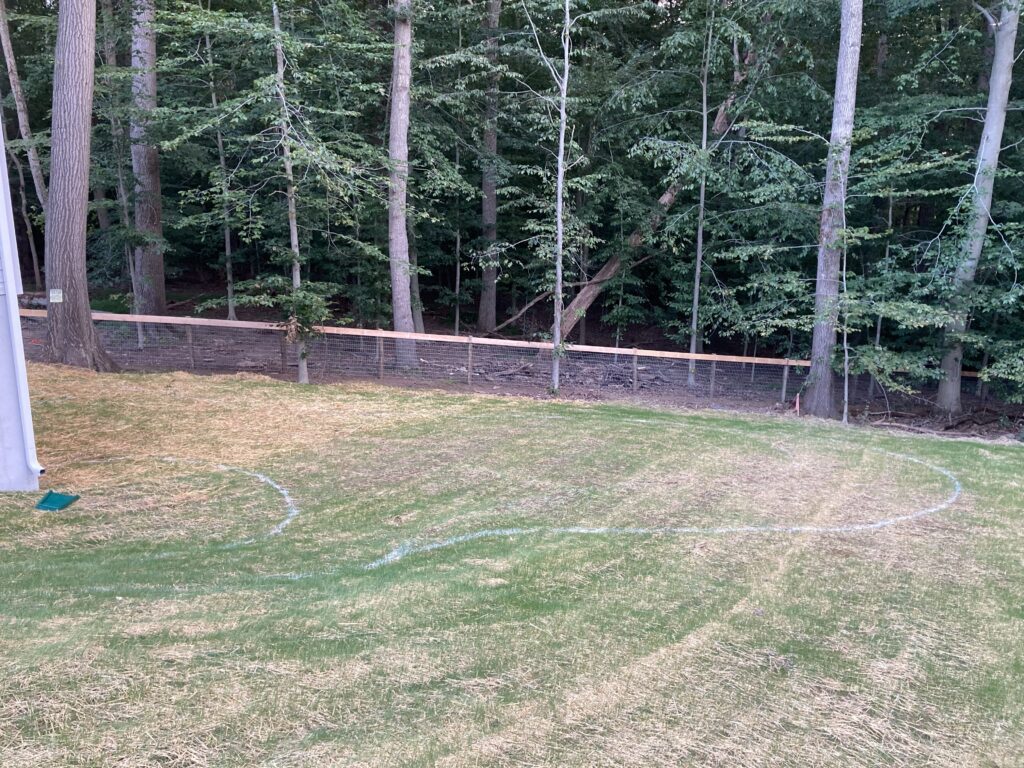
It was important to complement the natural wood line and not to take away from it
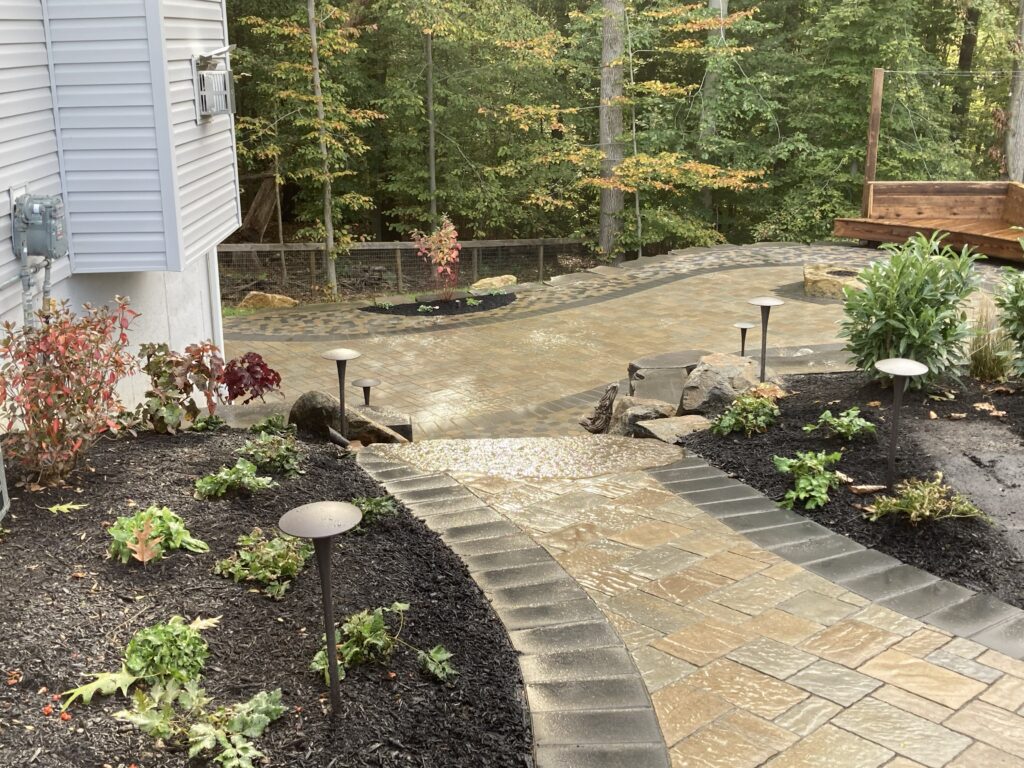
A new walkway was created with large cast stepping stones and boulder walls
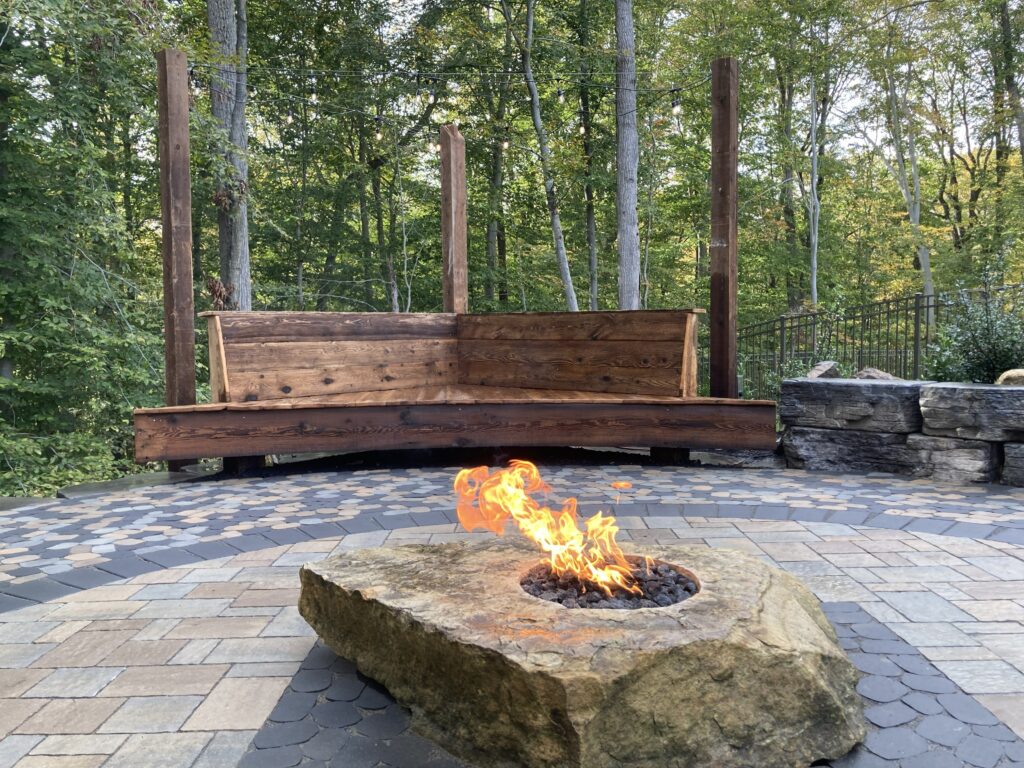
A custom seating area was built with White Oak and this boulder was turned into a fire pit
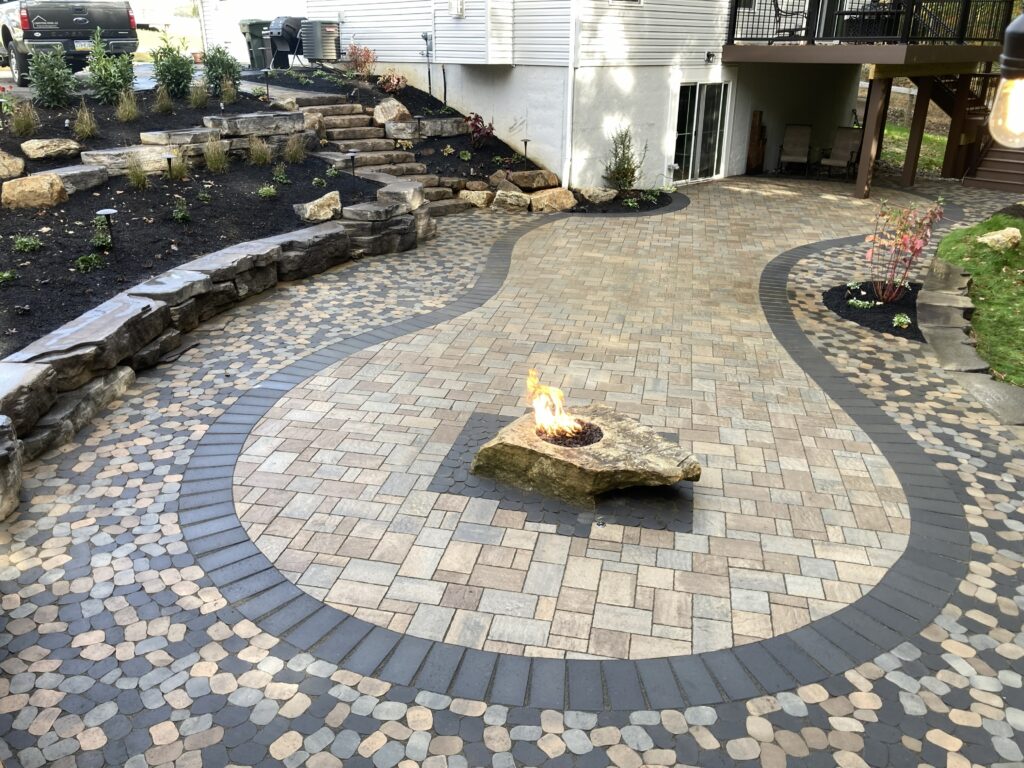
This paver patio incorporates multiple colors and textures to transform this yard
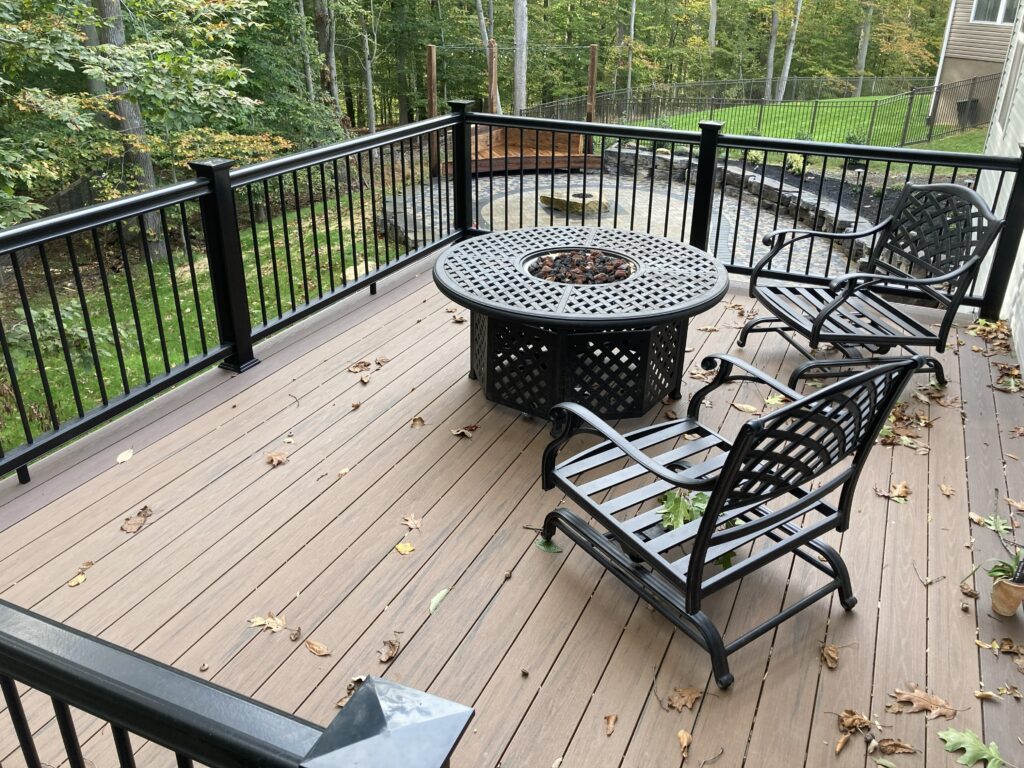
A new composite deck welcomes you out of the kitchen and provides a wonderful view
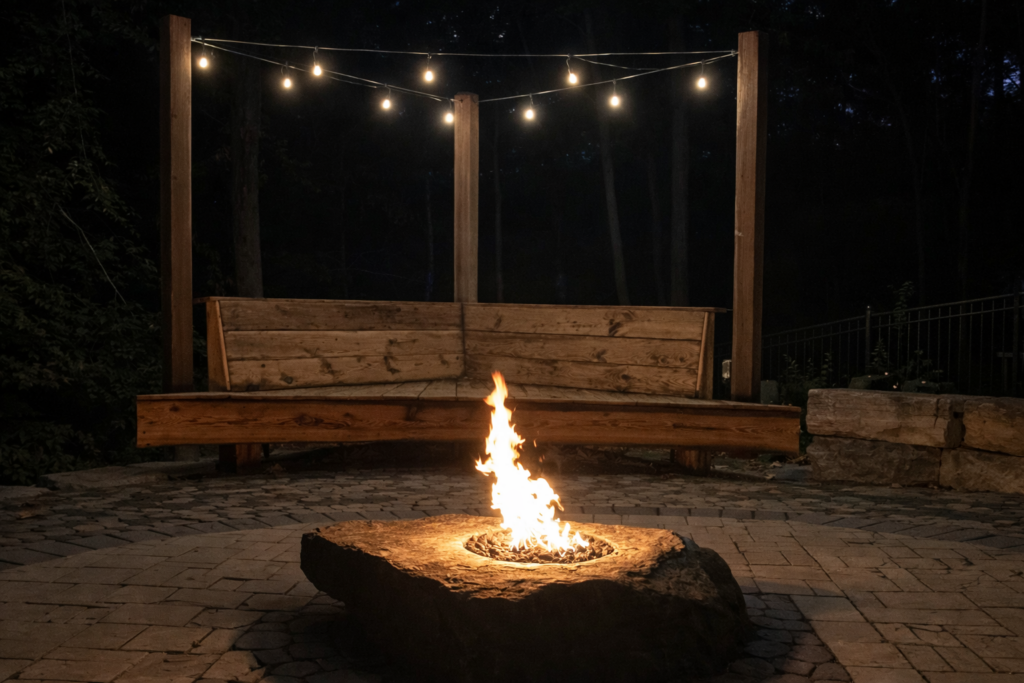
The fire boulder and bistro lights create a warm and intimate spot in the new yard
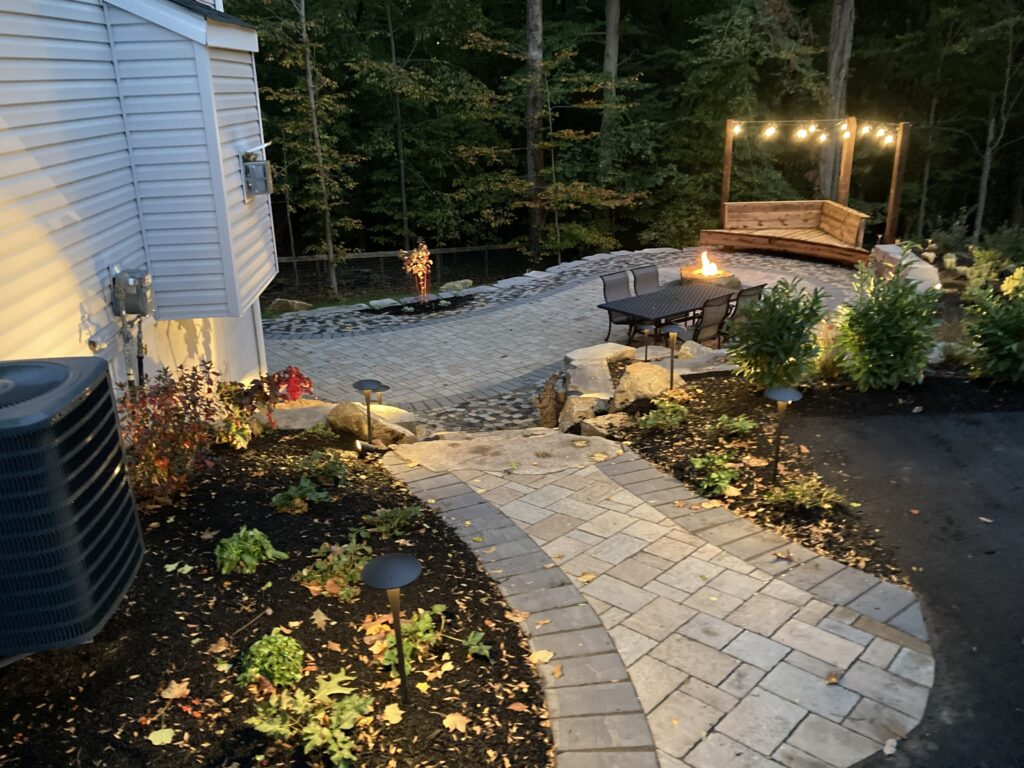
What used to be a steep slope is now a terraced garden with landscape lighting
What It's Like Getting Dirty With Us
Turns out, getting dirty is actually a pretty great experience.
Your Project Deserves a Better Experience
Frequently Asked Questions About Landscape and Hardscape Design for a New Custom Home
Planning outdoor spaces for a new home often raises important questions – especially around timing, design and how everything comes together. Many of these decisions are best made earlier than most homeowners expect, when they can have the greatest impact. The answers below are meant to provide clarity, prevent common missteps and help you approach this phase with confidence.
When should I start planning for landscaping or hardscaping during my new home construction?
The sooner the better. The right designer or landscape architect will want to start working with you early in the planning or construction phases. Designing the inside and outside at the same time, often leads to the best results.
Should I just have my home builder create my outdoor living space?
There are some home builders who offer hardscaping and landscaping services, but not all of them offer the same level of product. Some builders only offer basic planting packages or simple patio and deck designs. Landscape designers or landscape architects are who you want to work with when you’re looking for a unique plan and someone with an expertise in landscaping.
How long does the dirt around my new house need to settle before I build a patio or deck?
The general rule of thumb is to let the backfilled soil around the foundation of your home settle for six to twelve months. Work can be performed before that, but additional compaction may need to be performed.
Should my architect design my outdoor living space?
There are some architects who will design outdoor living spaces, but most of them stick to the house itself. A landscape designer or landscape architect is usually the best choice for creating the outdoor living space during or after the construction of your new house.